Dental Implant vs Bridge — How to Decide
If you are missing a tooth, you may hear two common options: a dental implant or a bridge. This guide explains the basic differences in plain language so you can compare your choices and discuss them with a licensed periodontist or dentist.
The short answer
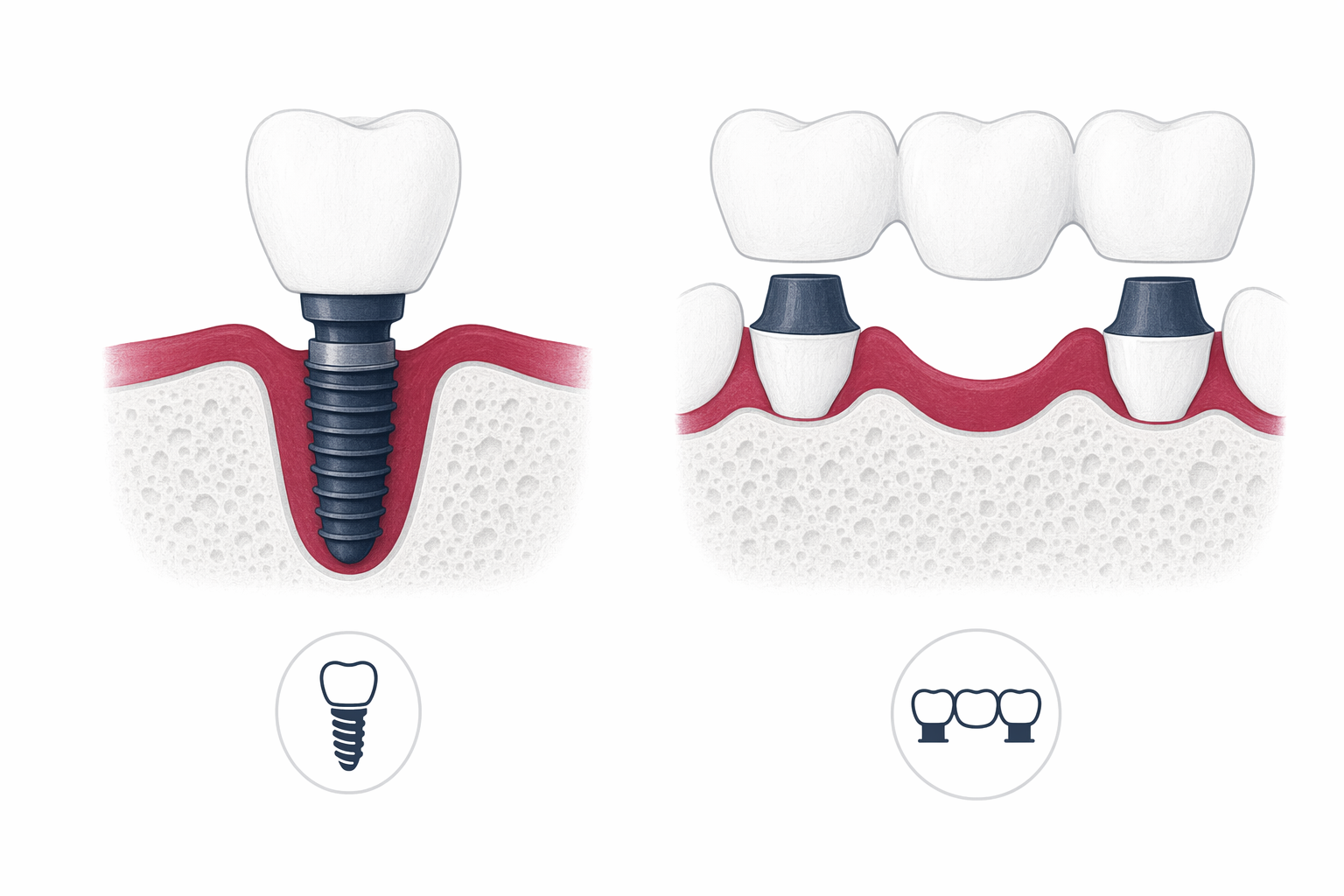
A dental implant is a replacement tooth root placed in the jawbone, with a crown added later. A bridge usually fills the gap by attaching an artificial tooth to the teeth next to the missing tooth.
Neither option is automatically "better" for everyone. The right choice depends on your gum health, bone support, nearby teeth, budget, timeline, and the treatment plan your provider recommends after an exam.
In general:
- An implant may be worth asking about if you want to replace one missing tooth without relying on neighboring teeth.
- A bridge may be considered if the teeth next to the gap already need crowns, or if you want a solution that may take less time up front.
- If you have active gum disease, treatment may come before either option. A licensed periodontist can tell you what is safe and appropriate after an in-person exam.
If you are still learning the basics, what a periodontist does can help you understand who handles gum and bone support around teeth and implants.
How implants and bridges are different
Both options can replace a missing tooth, but they work in different ways.
Dental implant
- A small post is placed in the bone where the tooth is missing.
- After healing, a connector and crown are usually added.
- It does not usually require cutting down the teeth next to the gap.
- It may require enough healthy bone and stable gums, or added treatment first.
Dental bridge
- A replacement tooth is supported by neighboring teeth, or in some cases by implants.
- With a traditional bridge, the teeth next to the gap are often shaped to hold crowns.
- It may be a practical option when nearby teeth already need major work.
- It does not usually involve placing a root into the bone in the empty space.
A few decision points matter a lot:
1. Condition of the teeth next to the gap
If the nearby teeth are healthy and untouched, some people prefer to ask whether an implant could avoid changing them. If those teeth already have large fillings or need crowns, a bridge may be part of the discussion.
2. Gum disease and bone loss
If your gums bleed, pull away, or feel loose around nearby teeth, your provider may first check for gum disease. In some cases, people need periodontal treatment before replacing a missing tooth. RootLine offers general education on gum disease treatment, but only a licensed provider can diagnose what is going on.
3. Cleaning and daily care
Both options need regular home care and professional follow-up. Bridges can create areas that need special flossing or threaders. Implants still need careful cleaning because gum inflammation and bone loss can happen around implants too.
4. Time and number of visits
A bridge may sometimes be completed faster. An implant often takes longer because treatment may happen in stages over time, especially if healing or grafting is needed first.
5. Long-term planning
The best choice is not only about today. It is also about the health of the surrounding gums, teeth, and bone over time.
Cost, timing, and gum health
Cost is one of the biggest reasons people compare these options. Real prices vary by the diagnosis, the number of teeth or areas treated, the provider, insurance, and where you live.
Typical US estimates:
- Dental implant: about $3,000-$6,000 per tooth all-in over time
- Bone graft: about $300-$1,200 if needed
- Gum graft: about $600-$1,200 per site if gum recession is part of the problem
- Periodontal flap or pocket-reduction surgery: about $1,000-$3,000 per area when deeper gum treatment is needed
- Routine periodontal maintenance: about $115-$300 per visit
A traditional bridge can also vary widely in cost based on the number of units, materials, and the condition of the supporting teeth. Your provider can explain the expected fees for your case.
Important: these are ranges and estimates, not quotes. The final plan depends on what a licensed provider finds during an exam.
Why gum health matters before replacing a tooth
If gum disease is active, it can affect both natural teeth and the support around a future implant. That does not mean you cannot replace a missing tooth. It means the order of care matters.
Many people need one or more of these first:
- A periodontal exam
- A deep cleaning, also called scaling and root planing
- Ongoing maintenance visits
- In some cases, grafting or other periodontal treatment
If you want to understand those steps, RootLine has general information on deep cleaning and scaling and treatment costs.
Safety note: severe pain, facial swelling, fever, or trouble breathing or swallowing means seek urgent dental or medical care right away.
Questions to ask before you choose
A good consultation should help you compare options clearly. You do not need to know all the technical terms. These simple questions can help:
- Is my gum disease under control, or does that need treatment first?
- Do I have enough bone and gum support for an implant, or would I need added treatment?
- What happens to the teeth next to the gap if I choose a bridge?
- How many visits will each option usually take in my case?
- What parts of the price are included, and what might be separate later?
- How should I clean around this option at home?
- What follow-up visits are typically needed?
You can bring a written list and take notes. It is okay to ask for plain-language explanations. It is also okay to compare more than one provider.
For more help getting ready, see questions to ask a periodontist.
What to do next
You do not have to decide based on ads or guesswork. A careful exam matters, especially if gum disease, loose teeth, or bone loss may be involved.
Here is a simple next step plan:
1. List your priorities.
Think about budget, timing, keeping nearby teeth unchanged if possible, and your comfort with a longer staged process.
2. Get an in-person evaluation.
A licensed dentist or periodontist can examine the area, look at bone and gum support, and explain whether gum treatment should happen first.
3. Compare the plan in writing.
Ask what each option includes, what may be separate, and what maintenance is usually recommended.
4. Confirm insurance and total costs.
Coverage varies. Always verify benefits and out-of-pocket costs directly with the provider and your plan.
5. Choose the provider you feel comfortable with.
You compare. You choose. You confirm the plan and price before any treatment.
RootLine is a free matching service, not a dental provider. We share general educational information and can help you get matched with a licensed periodontist. The form asks for contact and request details only, not a medical or dental history.
Missing a tooth does not mean there is one best answer for everyone. Learn the differences, ask simple questions, and see a licensed periodontist or dentist for an exam so you can compare the plan, timing, and real costs before you choose.