The stages of gum disease, explained
Gum disease usually starts quietly. Knowing the common stages can help you ask better questions and decide when to see a licensed periodontist for an exam.
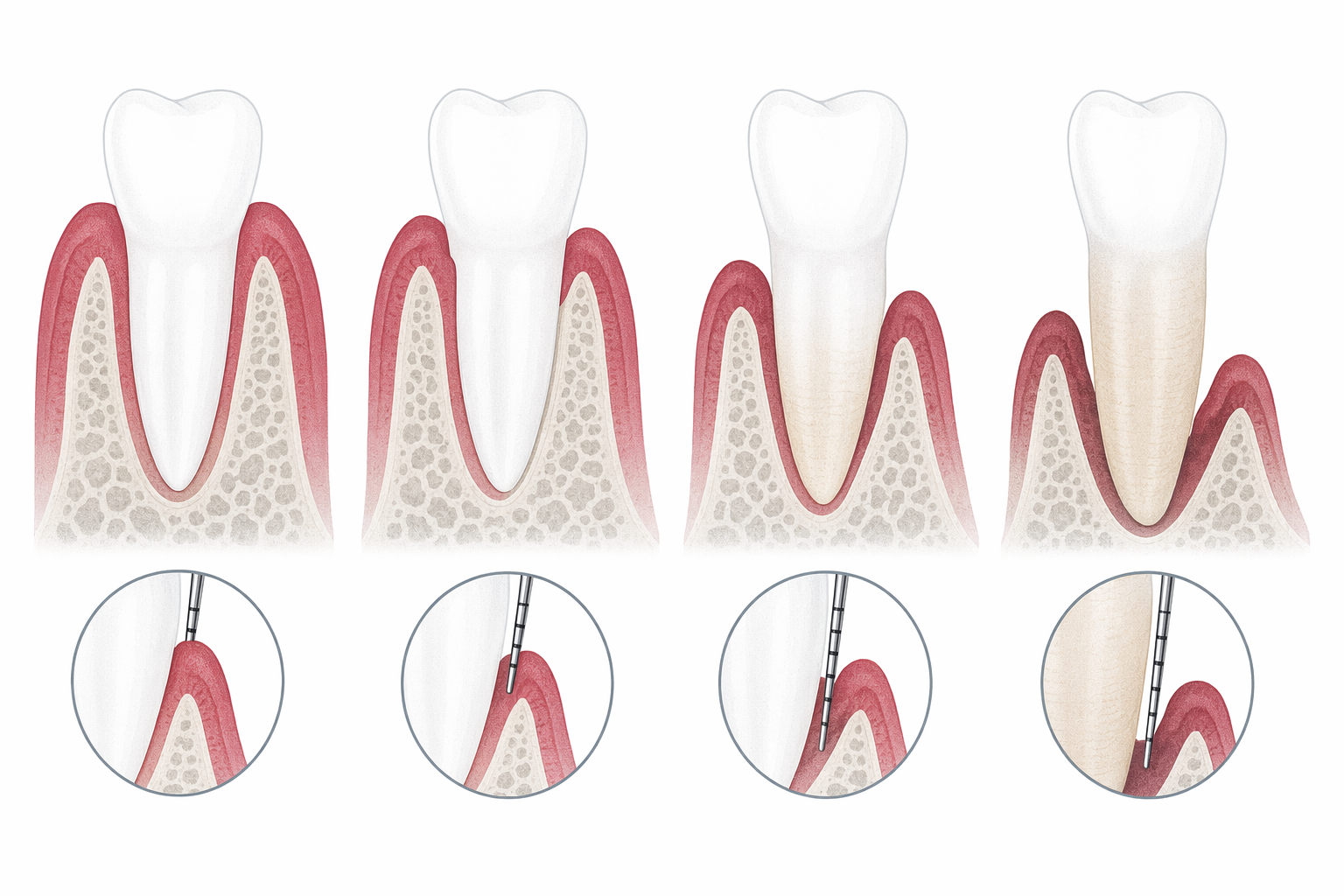
What gum disease is, in simple terms
Gum disease is an infection and inflammation of the gums and the tissues that support your teeth. It often begins with plaque, a sticky film of bacteria that builds up near the gumline. If plaque is not removed well, it can irritate the gums and lead to deeper problems over time.
The important thing to know is this: gum disease can change from mild to more serious. Early stages may cause little pain, so many people do not realize anything is wrong. That is why bleeding when brushing, ongoing bad breath, or gums that look red or swollen should not be ignored.
This page is general education only. It is not medical or dental advice, and it is not a diagnosis. Only an in-person exam by a licensed dentist or periodontist can tell you what stage you may have and what treatment, if any, is appropriate. If you want more background, see what a periodontist is.
The common stages, from early to advanced
People often hear different terms for gum disease. The names can sound technical, but the basic progression is easier to understand.
1. Healthy gums
Healthy gums are usually firm, pink or coral in color, and do not bleed easily during normal brushing and flossing. Teeth feel stable. There is usually no bad taste or persistent odor coming from the gums.
2. Gingivitis
This is the early stage. The gums may look red, puffy, or shiny. They may bleed when brushing or flossing. Some people notice tenderness or bad breath. At this stage, the problem is generally limited to the gums.
3. Early periodontitis
At this point, the infection and inflammation begin affecting the supporting structures around the teeth. A dental professional may measure deeper spaces around the teeth, often called periodontal pockets. You may not feel much pain, but you might notice more frequent bleeding, mild gum recession, or a bad taste in your mouth.
4. Moderate periodontitis
The supporting tissues are more affected. Gums may pull away from teeth more noticeably. Teeth can start to feel sensitive, look longer, or trap food more often. Some people notice shifting teeth or discomfort when chewing.
5. Advanced periodontitis
This is the most serious stage. Bone and tissue support may be significantly reduced. Teeth may feel loose, spaces between teeth may change, and chewing may become harder. In some cases, teeth may eventually need to be removed if they cannot be supported.
Not every person moves through these stages at the same speed. Smoking, diabetes, oral hygiene habits, stress, genetics, and how long the problem has been present can all play a role. A licensed periodontist can explain what they see on your exam and imaging, and what that means for your options.
If you want a provider to confirm what is going on, you can get matched with licensed periodontists in your area at no cost.
Signs people often notice at each stage
Symptoms do not always match severity. Some people have serious gum problems with little pain. That is one reason in-person exams matter.
Common early signs
- Bleeding when brushing or flossing
- Red, swollen, or tender gums
- Bad breath that keeps coming back
- A bad taste in the mouth
Signs that may suggest a more advanced problem
- Gums pulling away from teeth
- Teeth looking longer than before
- New spaces between teeth
- Loose teeth or teeth that feel different when biting
- Pus near the gums
- Chewing discomfort
These signs do not tell you your exact stage on their own. They are reasons to get checked.
Safety note: If you have severe pain, facial swelling, fever, or trouble breathing or swallowing, seek urgent dental or medical care right away.
For a broader overview of treatment paths a specialist may discuss after an exam, see gum disease treatment.
What usually happens after you see a periodontist
A periodontist is a dentist with advanced training in gum disease and the structures that support the teeth. They can diagnose the stage and explain treatment options. RootLine does not diagnose, treat, or provide care. We are a free matching service.
After an in-person exam, a licensed provider may talk through one or more of these common approaches, depending on the diagnosis:
- Deep cleaning (scaling and root planing): often used when bacteria and buildup have collected below the gumline. A typical range is about $150-$400 per quadrant.
- Periodontal maintenance: ongoing cleanings for people who need closer follow-up after active treatment. A typical range is about $115-$300 per visit.
- Gum grafts: sometimes considered when recession exposes root surfaces. A typical range is about $600-$1,200 per site.
- Periodontal flap or pocket-reduction surgery: sometimes discussed when deeper pockets and tissue damage need more direct access. A typical range is about $1,000-$3,000 per area.
- Bone grafting: sometimes used in certain areas where bone support has been lost. A typical range is about $300-$1,200.
- Dental implants: may be discussed if a tooth is missing or cannot be saved. A typical all-in range over time is about $3,000-$6,000 per tooth.
These are honest estimates, not quotes. The real price depends on the diagnosis, the number of teeth or areas treated, the provider, insurance, and where you live. You can learn more about typical pricing and insurance questions on our costs page.
You compare. You choose who to see. You confirm the plan and price with the provider before any treatment.
Common mistakes that can delay care
Many people wait because they are unsure whether their symptoms are serious enough. A few common mistakes can make things harder later.
- Waiting for pain. Gum disease is often not very painful at first.
- Assuming bleeding is normal. Occasional irritation can happen, but regular bleeding deserves attention.
- Thinking a cleaning alone always answers the problem. Sometimes a regular cleaning is enough, and sometimes a deeper evaluation is needed. Only an exam can tell you.
- Focusing only on cost and not on the treatment plan. Ask what stage the provider believes you have, why they recommend the treatment, and what alternatives may exist.
- Not checking insurance details. Coverage can vary by plan and by procedure.
- Delaying because English is not your first language. Understanding the plan matters. Ask for plain-language explanations and written estimates.
A good next step is to write down your questions before the visit. Our guide to questions to ask a periodontist can help you compare providers more confidently.
What to do next if you are worried about your gums
If you think something may be wrong, keep the next step simple.
- Notice the pattern. Are your gums bleeding often? Do they look swollen? Are your teeth feeling loose or different?
- Book an exam with a licensed periodontist or dentist. Only an in-person exam can diagnose gum disease and explain the stage.
- Bring practical questions. Ask what they found, what stage they think it is, what treatment options they recommend, and what the estimated costs may be.
- Compare before you decide. You do not have to say yes on the spot. Review the plan, timing, and cost.
RootLine helps people across the US, including new immigrants and non-native English speakers, connect with licensed periodontists. The matching service is free. The form asks for contact and general request details only, not a medical or dental history.
If you are ready, you can get matched and choose the provider that feels right for you.
Gum disease often starts with bleeding or swollen gums and can become more serious over time, sometimes without much pain. Only a licensed periodontist can diagnose the stage, so if your gums keep bleeding, look different, or your teeth feel loose, get an in-person exam and compare your options before choosing treatment.