Dental implant placement & maintenance
Dental implants are one option for replacing missing teeth when your mouth is healthy enough to support them. RootLine is a **free matching service** that helps you compare licensed periodontists. We do not provide dental care, diagnosis, or treatment.
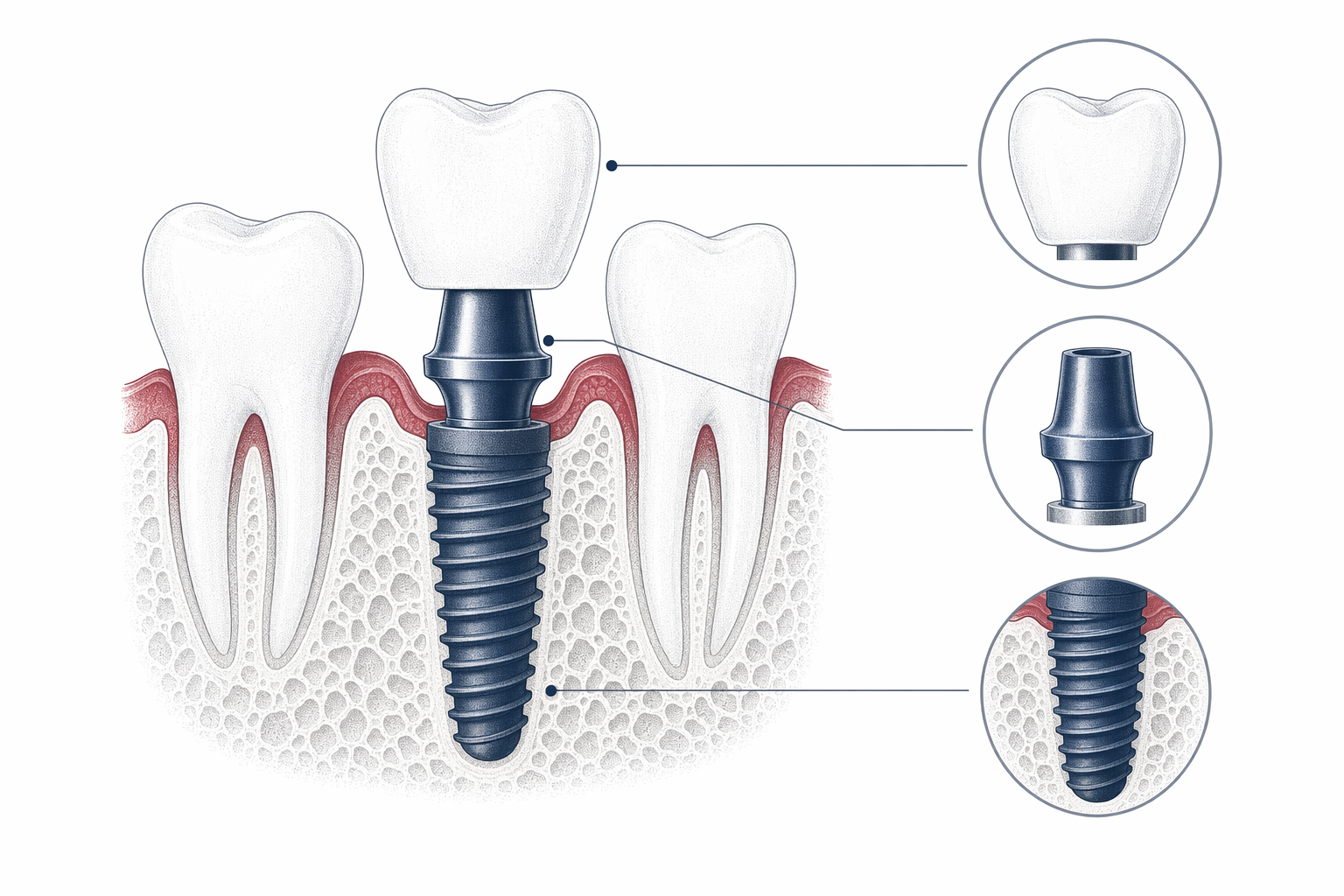
What dental implant placement means
A dental implant is a small post placed in the jaw to support a replacement tooth. The visible tooth is usually added later, after healing. Many periodontists place implants because they focus on gums, bone, and the structures that support teeth.
Implant treatment is not one single appointment for everyone. The plan depends on your exam, gum health, bone levels, the tooth location, and whether extra steps are needed first.
A licensed periodontist or dentist must examine you to say whether an implant is a good option. RootLine only provides general educational information and a free way to get matched with providers. If you want a basic overview of the specialist’s role, see what a periodontist is.
How implant treatment often works
Many people move through implant treatment in stages:
1. Exam and imaging
The provider checks your mouth, reviews the area, and may take imaging to look at bone and nearby structures.
2. Planning
The provider explains whether the site is ready now or whether gum treatment, an extraction, or a bone graft may be recommended first.
3. Implant placement
The implant post is placed in the jaw during a procedure done by the treating provider.
4. Healing period
The area usually needs time to heal before the final tooth is attached. Your provider can tell you what timeline is typical in your case.
5. Abutment and final restoration
A connector and replacement tooth are added later, often with another dental professional involved depending on the office setup.
6. Maintenance visits
Long-term follow-up matters. Implants still need regular cleanings, home care, and gum checks.
If active gum disease is present, treatment for that may come first. Learn more about gum disease treatment if you are trying to understand that part of the process.
Typical cost ranges and what affects the price
For many people in the US, a single dental implant often totals about $3,000-$6,000 per tooth over time. This is a typical range, not a quote. The real price depends on the diagnosis, the number of teeth or areas treated, the provider, insurance, and the area.
What can change the total:
- Whether the price includes only the implant post or also the final crown
- Whether you need an extraction first
- Whether a bone graft is needed, often around $300-$1,200 as a typical range
- Whether gum treatment is needed before implant work
- The tooth location, difficulty, and imaging used
- The provider’s fees and your local market
Insurance coverage varies. Some plans help with parts of care and some do not. It is important to ask for a written treatment plan and confirm what is included before you start. You can read more at costs and does insurance cover gum treatment.
RootLine matching is free to you. If you use our service, you compare your options and confirm the treatment plan and price directly with the provider before any care.
Healing, recovery, and long-term maintenance
Recovery is different for each person. Some people have a simpler course, while others need several steps over months. Your provider can explain what is typical for your case based on the site, the amount of bone, and whether grafting or other treatment is needed.
A few practical points:
- It is normal to ask how many visits are likely and what happens at each stage.
- The final timeline may be shorter or longer depending on healing and the overall plan.
- Good home care matters. Plaque can still build up around implants.
- Regular follow-up is important because the gum and bone around implants need monitoring too.
Many people also need periodontal maintenance after treatment. A routine periodontal maintenance visit often runs about $115-$300 per visit as a typical range, depending on the provider, the visit type, insurance, and the area.
If you have severe pain, facial swelling, fever, or trouble breathing or swallowing, seek urgent dental or medical care right away.
Benefits, limits, and when to ask more questions
Implants can be a useful option for some people, but they are not the best fit for everyone.
Possible benefits
- Can replace a missing tooth without a removable appliance
- Often feels more stable than some alternatives
- May help support chewing function and appearance
- Can be used for one tooth or, in some cases, as part of a larger plan
Limits and tradeoffs
- Usually costs more upfront than some other tooth-replacement options
- Often takes multiple visits and healing time
- May require enough healthy bone and gum support
- May involve extra procedures such as bone grafting
- Still needs daily cleaning and professional maintenance
- Like natural teeth, implants can have problems if gums and bone are not healthy
If your gums bleed, feel tender, or seem to be pulling away from teeth, ask whether gum treatment should come before implant placement. A specialist can also explain whether a graft or other periodontal procedure may be relevant. For background, these guides may help: stages of gum disease and periodontal surgery.
Questions to ask at a consultation
Bring a short list of questions. Clear answers can help you compare providers and feel more confident.
- Am I a possible candidate for an implant in this area?
- What exam or imaging do you need before deciding?
- Is my gum health stable enough now, or do I need treatment first?
- Do you expect I may need a bone graft or another procedure?
- About how long could the full process take in my case?
- What parts of the cost are included, and what parts are separate?
- Who makes the final crown or restoration?
- What kind of cleaning and follow-up will I need after treatment?
- What signs of a problem should I watch for during healing?
You can use our full checklist of questions to ask a periodontist when you compare options.
How RootLine can help you find a periodontist
RootLine is a free, multilingual matching service for people across the US, including new immigrants and non-native English speakers. We help you connect with licensed periodontists so you can compare and choose who to see.
Our form asks for contact and general request details only. It does not ask for a medical or dental history.
When you are ready:
- Share your contact and request details.
- Review matched providers when available.
- Contact the office you prefer.
- Confirm the exam, treatment options, and pricing directly with that provider.
If you want to explore your options, start here: Get matched and learn more about dental implants.
Dental implants can replace missing teeth, but the steps, timeline, and cost depend on your gums, bone, and treatment plan. RootLine can help you compare licensed periodontists for free, and you should confirm the diagnosis, options, and exact pricing with the provider before any treatment.