Periodontal (gum) surgery
Periodontal surgery is a group of procedures a licensed periodontist may use to help manage advanced gum problems, reduce deep pockets, or support teeth and bone. This page gives general educational information only, not medical advice or a diagnosis.
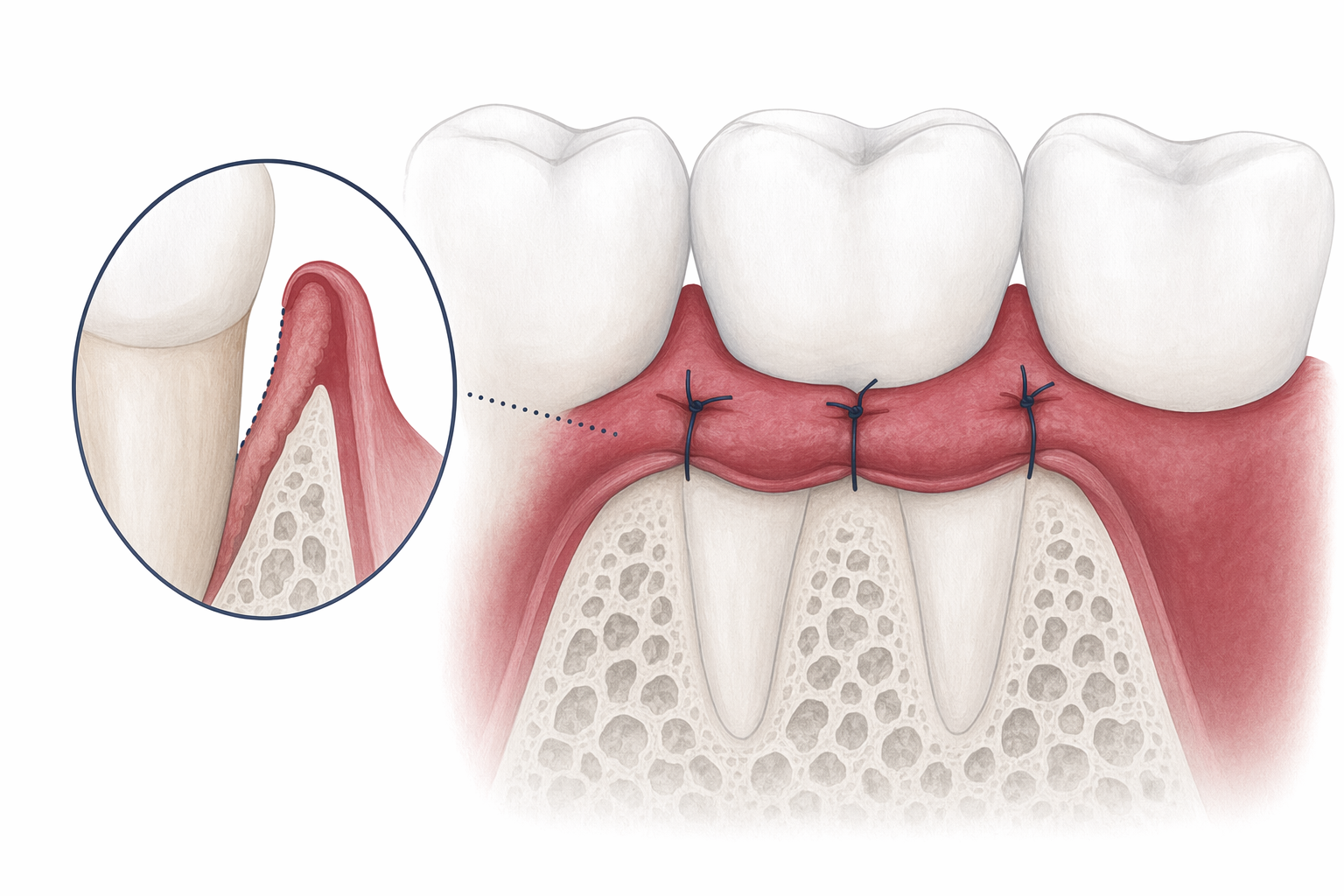
What periodontal surgery is
Periodontal surgery means surgery on the gums and supporting structures around the teeth. It is usually considered when gum disease is more advanced, when deep pockets are hard to clean, or when a periodontist needs better access to the roots and bone.
A periodontist may recommend surgery only after an exam and X-rays. RootLine does not examine, diagnose, or treat. We are a free matching service that helps you compare licensed periodontists in your area so you can decide who to see.
Common reasons a periodontist may discuss gum surgery include:
- Deep gum pockets that may still collect bacteria after non-surgical treatment
- Areas where gum tissue has pulled away from the teeth
- Bone loss around teeth
- The need to reshape gum or bone areas to make cleaning more manageable
- Preparing or rebuilding an area before other dental work in some cases
Not everyone with gum disease needs surgery. In many cases, a provider may first talk about deep cleaning (scaling and root planing) or ongoing maintenance. If you want background first, see our guide to the stages of gum disease.
How it usually works
The exact steps depend on the problem being treated. Your periodontist can tell you what applies to your mouth, why they are recommending it, and whether there are other options.
Here are common types of periodontal surgery:
1. Flap or pocket-reduction surgery
- The gum tissue is gently moved back so the roots and bone can be cleaned more directly.
- The provider may reduce pocket depth so daily cleaning is easier.
2. Gum grafting
- Used when gums have receded in one or more spots.
- Tissue may be placed to help protect exposed roots or improve the gum line.
- Learn more about gum grafts.
3. Bone grafting or regenerative procedures
- Used in some areas with bone loss.
- The goal is often to help support the tooth or rebuild the site, depending on the diagnosis.
4. Crown lengthening or reshaping in some cases
- A provider may adjust gum and sometimes bone levels to expose more tooth structure.
What an appointment may include:
- Local numbing is commonly used
- The area is treated based on the plan
- Stitches and a protective dressing are sometimes used
- You get home-care instructions and a follow-up visit
This is general information only. Only a licensed dentist or periodontist can diagnose the condition and explain whether surgery is appropriate for you.
Typical cost ranges in the US
The price of periodontal surgery can vary a lot. These are typical ranges and estimates, not quotes. Your real price depends on the diagnosis, how many teeth or areas are treated, the provider, insurance, and where you live.
Typical ranges people may see:
- Periodontal flap or pocket-reduction surgery: about $1,000-$3,000 per area
- Gum graft: about $600-$1,200 per site
- Bone graft: about $300-$1,200
- Routine periodontal maintenance after treatment: about $115-$300 per visit
Other costs may also matter:
- Exam or imaging fees in some offices
- Sedation fees if offered and chosen
- Follow-up visits
- Additional treatment if more than one area needs care
Insurance may help in some situations, but coverage rules differ. Some plans cover part of medically necessary periodontal treatment, while others have waiting periods, deductibles, annual maximums, or limits by procedure. See insurance and gum treatment and our broader costs guide for more context.
Before you agree to treatment, ask the office for:
- The name of the procedure
- The number of areas or sites being treated
- An itemized estimate
- What insurance may cover, if any
- What you would likely pay yourself
You compare. You choose who to see. You confirm the plan and price with the provider before any treatment.
Recovery and timeline: what many people can expect
Recovery is different for each person and procedure. Your provider can tell you what is typical for your case. In general, many people have some soreness, swelling, or tenderness for several days after gum surgery. Some procedures heal faster than others.
A general timeline may look like this:
- First 24-72 hours: mild to moderate discomfort, swelling, and careful eating are common
- First 1-2 weeks: the tissue usually starts settling; stitches may be checked or removed depending on the procedure
- Several weeks and beyond: deeper healing continues over time, and the periodontist monitors the area
You may be told to:
- Eat softer foods for a short time
- Clean the area carefully and follow the office instructions exactly
- Avoid smoking if possible, since it can affect healing
- Return for follow-up visits and periodontal maintenance
It is important to understand that surgery is often only one part of periodontal care. Long-term gum health usually also depends on daily home care and regular professional maintenance.
Safety note: If you have severe pain, facial swelling, fever, or trouble breathing or swallowing, seek urgent dental or medical care right away.
Possible benefits and limitations
A periodontist may discuss surgery when the likely benefits outweigh the downsides. But no procedure is perfect, and no one can promise a result in advance.
Possible benefits may include:
- Better access to remove buildup below the gum line
- Reduced pocket depth in some cases
- Improved support for teeth or exposed roots, depending on the procedure
- A gum shape that may be easier to keep clean
- A way to address areas where non-surgical care may not be enough
Possible limitations or tradeoffs may include:
- Cost, especially if several areas need treatment
- Recovery time and temporary discomfort
- More than one visit may be needed
- Results can vary based on the condition of the teeth, gums, and bone
- Ongoing maintenance is still often needed after surgery
If a recommendation feels unclear, ask why this option was chosen over non-surgical care, watchful monitoring, or another procedure. A good consultation should help you understand the reason for the recommendation in plain language.
Questions to ask at the consultation
You do not need to know every dental term. A simple list can help you compare providers with more confidence.
Ask questions like these:
- What exactly are you diagnosing, and how serious is it?
- Why are you recommending this procedure instead of a non-surgical option?
- How many teeth, sites, or areas are being treated?
- What are the main risks, limits, and likely follow-up needs?
- What kind of recovery is typical for this procedure?
- What will I need to do at home after the appointment?
- What is the estimated total cost, and what could change it?
- Will I likely need maintenance visits afterward, and how often?
You can bring these with you, or review our full list of questions to ask a periodontist. If you are still learning the basics, our guide on what a periodontist is may also help.
Find a licensed periodontist near you
RootLine is built for people who want clear information and a simple next step. We help people across the US, including new immigrants and non-native English speakers, connect with licensed periodontists.
What RootLine does:
- Matching is free for you
- You can compare providers and decide who to contact
- We share general educational information, not medical advice
- Our form asks for contact and request details only, not a medical history
If you are ready to explore options, you can get matched with licensed periodontists near you. A periodontist can examine you in person, explain whether surgery is needed, and review your treatment plan and price before any care starts.
Gum surgery may help in some advanced cases, but only a licensed periodontist can tell you if you need it. Use RootLine to compare periodontists for free, ask clear questions, and confirm the treatment plan and full estimated cost before you choose.