Gum grafts & gum recession treatment
If your gums are pulling back from your teeth, a licensed periodontist may talk with you about a gum graft. RootLine is a **free matching service** that helps you compare periodontists near you, but we do not diagnose, examine, or provide care.
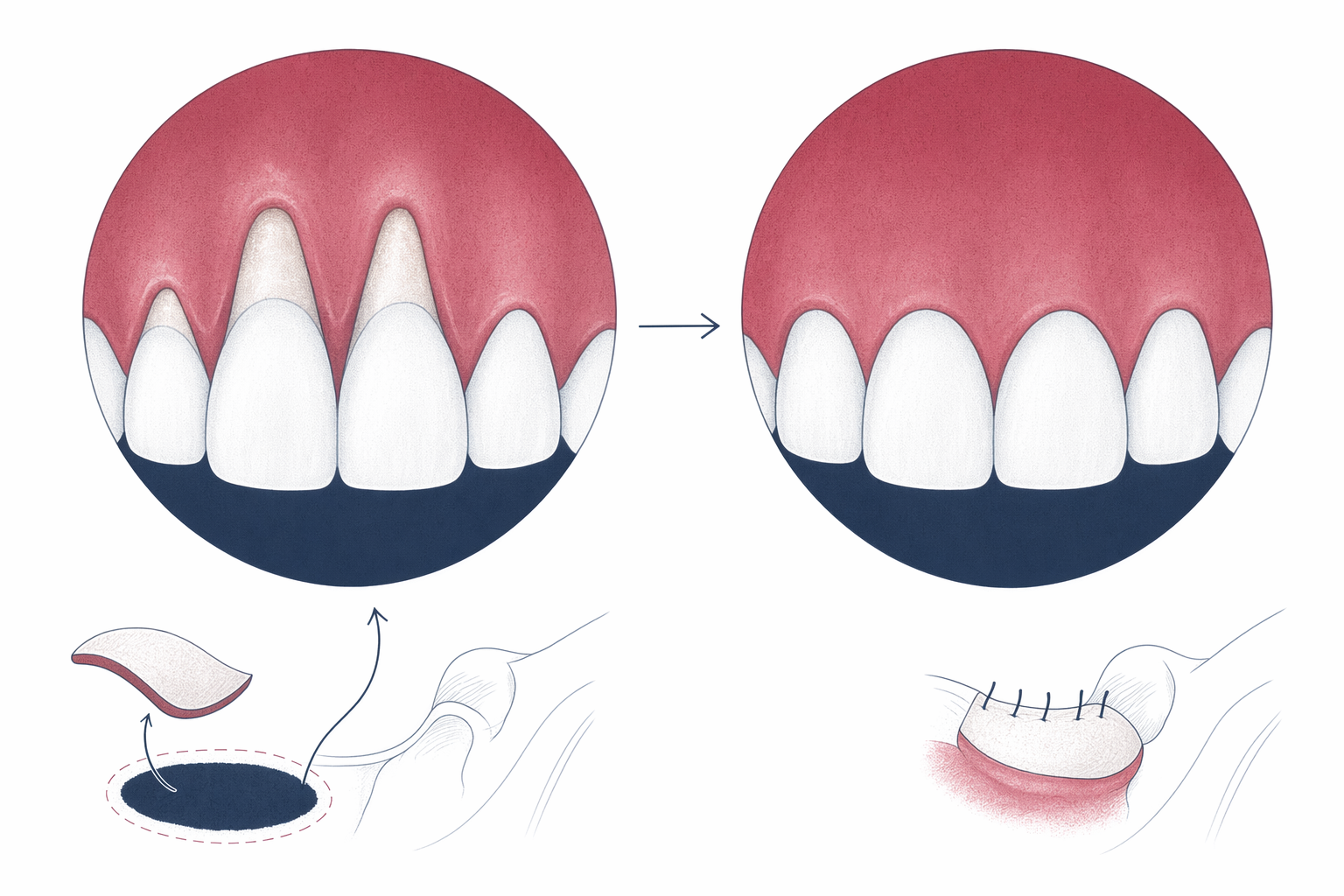
What a gum graft is
A gum graft is a procedure a licensed periodontist may use when gum tissue has receded and more of the tooth root is exposed. The goal is often to add or reposition gum tissue in an area that needs more coverage or protection.
Gum recession can happen for different reasons. Common examples include gum disease, brushing too hard, thin gum tissue, teeth that are hard to clean, bite forces, or changes around older dental work. Only an in-person exam can show what is causing it in your case.
A graft is not the right choice for everyone. Some people may first need gum disease treatment, a change in home care, or monitoring over time. A licensed periodontist can explain whether a graft makes sense, what type may be used, and what the limits are.
If you are still learning the basics, see what a periodontist is and how specialists look at gum health.
When a periodontist may recommend recession treatment
People often look into recession treatment because they notice:
- Teeth looking longer than before
- A notch or root surface showing near the gumline
- Cold sensitivity in one area
- Tender gums when brushing
- Worry about appearance, especially on front teeth
- Food trapping near the gumline
A periodontist may look at several things before discussing treatment:
- How much recession is present
- Whether gum disease is active
- How much bone support remains
- Your brushing and cleaning habits
- Whether the area is stable or getting worse
- Your goals, such as comfort, easier cleaning, or appearance
Not every receding gumline needs surgery right away. In some cases, a provider may suggest a deep cleaning, changes in brushing technique, or regular monitoring first. You can learn more about gum disease treatment if inflammation or infection is part of the picture.
Important: severe pain, facial swelling, fever, or trouble breathing or swallowing means seek urgent dental or medical care right away.
How gum grafting usually works
The exact plan depends on the tooth, the amount of recession, and the type of tissue available. Your provider will explain the approach they recommend and why.
In general, the process often looks like this:
- Exam and planning. The periodontist examines the area, may take images or measurements, and talks through options.
- Preparing the site. The gum area is cleaned and prepared.
- Placing graft tissue. Tissue may come from your own mouth or from another approved source, depending on the method your provider uses.
- Securing the graft. The tissue is positioned and held in place so it can heal.
- Follow-up visits. The provider checks healing and tells you when normal brushing and chewing can resume in that area.
There are different graft techniques. Some are used more often for root coverage, some for adding thickness, and some for helping protect a thin gumline. A licensed periodontist can tell you which method fits the tooth or teeth involved.
If you are comparing options, questions to ask a periodontist can help you have a clearer conversation.
Typical cost of a gum graft
A gum graft in the US typically costs about $600 to $1,200 per site. That is a general estimate, not a quote. The real price depends on the diagnosis, the number of teeth or areas treated, the technique used, the provider, insurance, and where you live.
Cost may be higher or lower based on things like:
- How many sites need treatment
- Whether you need treatment in one visit or several visits
- The complexity of the recession
- Whether other gum treatment is needed first
- The periodontist's office fees and your local area
- Insurance benefits, annual maximums, and waiting periods
Ask for a written treatment plan before you schedule. That gives you a clearer view of the expected fees, what may be covered, and what you may owe yourself.
For broader price context, see costs and whether insurance may cover gum treatment.
Remember: you compare, you choose who to see, and you confirm the plan and price with the provider before any treatment.
Recovery and timeline
Healing is different for each person and each surgical site. Your own provider can give the most accurate timeline for your situation.
Many people can return to normal daily activities fairly soon, but the gum area itself often needs more time to settle. It is common to have a period where the site feels tender and you need to avoid brushing, flossing, or chewing on that area until your periodontist says it is safe.
A typical timeline may include:
- First few days: follow eating and cleaning instructions carefully
- First 1-2 weeks: a follow-up visit may be scheduled to check the area
- Several weeks after: the tissue may continue to mature and blend in
- Longer term: the provider checks stability and whether your home care routine should change
Your periodontist may suggest softer foods for a period of time, careful cleaning around the site, and temporary changes to your oral hygiene routine. It is important to follow their instructions closely because home care can affect healing.
Call the treating office if you have concerns after a procedure. If you develop severe pain, facial swelling, fever, or trouble breathing or swallowing, seek urgent dental or medical care right away.
Pros, limits, and alternatives
A gum graft can be helpful in the right case, but it also has tradeoffs. It helps to look at both sides.
Possible benefits many people discuss with their provider:
- More tissue covering an exposed root
- Less sensitivity in some cases
- Better support for a thin gumline
- Improved appearance for some teeth
- Easier cleaning if the area becomes more stable
Limits and downsides to understand:
- It is still a surgical procedure
- Cost can add up if several sites are involved
- Healing takes time and follow-up
- Not every tooth is a good candidate for full root coverage
- Results vary based on anatomy, gum health, and home care
Possible alternatives or related care:
- Monitoring if the area is stable
- Treating active gum disease first
- A deep cleaning if tartar and inflammation are present below the gumline
- Changes in brushing method or tools
- Bite or restorative evaluation if another problem is contributing
A good specialist will explain not only what they recommend, but also what may happen if you wait, and whether there are non-surgical options to consider first.
How to compare periodontists and get matched free
RootLine is a free, multilingual matching service for people across the US, including new immigrants and non-native English speakers. We help you connect with licensed periodontists. We do not diagnose, treat, or provide dental care.
When you use RootLine, the form asks for contact and general request details only. It does not ask for a medical or dental history.
Before you book, it can help to ask:
- What is causing the recession in my case?
- Do I need gum disease treatment before a graft?
- Which graft method are you recommending, and why?
- How many sites may need treatment?
- What is the typical fee range, and what might insurance cover?
- What should I expect during healing and follow-up?
- What happens if I wait or choose another option?
You stay in control. You compare. You choose who to see. You confirm the treatment plan and price with the provider before any treatment.
If you are ready to explore options, get matched with licensed periodontists near you.
If your gums are pulling back, a licensed periodontist can check the cause and tell you whether a gum graft, other gum treatment, or simple monitoring makes sense. RootLine helps you compare periodontists for free, and you confirm the plan and price directly with the office.