What is a periodontist?
A periodontist is a licensed dentist with advanced training in gum health, bone support around teeth, and dental implants. This page gives general educational information only, not medical advice or a diagnosis.
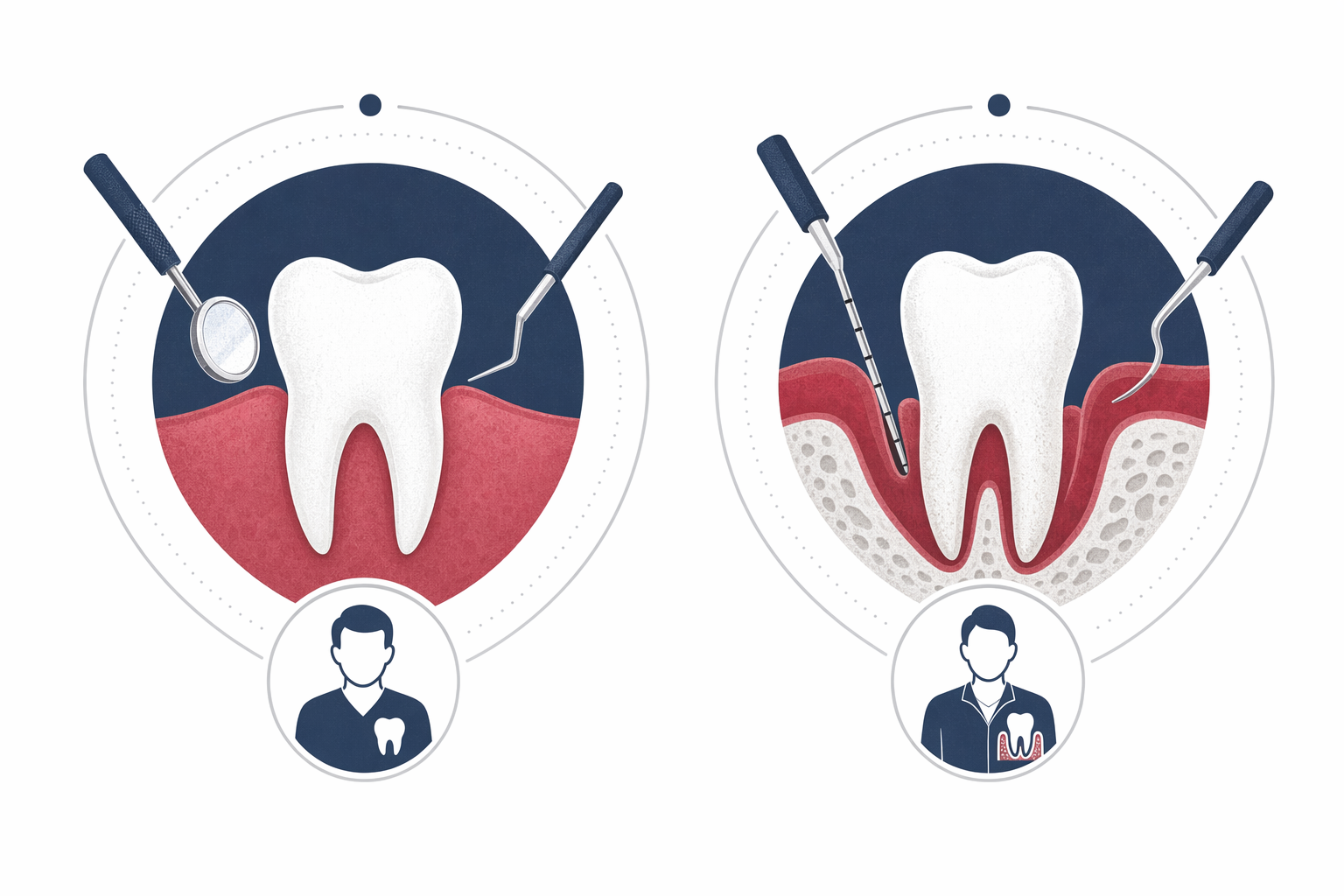
What a periodontist does
A periodontist is a dentist who focuses on the gums and the bone that support your teeth. Many people see a general dentist for regular cleanings and exams. A periodontist is the specialist a dentist may suggest when gum problems are more complex, more advanced, or need specialist care.
Periodontists often evaluate and treat issues such as:
- gum inflammation and deeper gum infection
- gum recession, where the gum line pulls away from the teeth
- deep pockets around teeth
- bone loss around teeth
- loose teeth related to gum support
- planning and placing dental implants
Some periodontists provide services such as deep cleaning, gum grafting, periodontal surgery, bone grafting, and implant care. What is appropriate depends on an in-person exam, X-rays or other imaging, and the provider's clinical judgment. RootLine does not diagnose, examine, or provide treatment. We share general educational information and help you get matched, for free, with licensed periodontists so you can compare and choose.
If you want a simple overview of the specialty, see what is a periodontist.
When people are referred to a periodontist
You do not need to guess whether you "really need" a specialist. A licensed dentist or periodontist can tell you after an exam. In general, people are often referred when a general dentist notices signs that gum support may need closer attention.
Common reasons for a referral include:
- gums that bleed often when brushing or flossing
- gums that look swollen, red, or tender
- bad breath that does not seem to go away
- gum recession or teeth that look longer than before
- spaces forming between teeth
- loose teeth or changes in bite
- concern about bone loss seen on dental X-rays
- interest in an implant where gum and bone support matter
A periodontist may also help when earlier treatment did not fully solve the problem, or when a patient wants a specialist opinion before moving forward.
This information is general and educational only. Bleeding gums or recession can have different causes, and only an in-person exam can determine what is going on. If you want to learn more about how gum problems can progress, read stages of gum disease.
Safety note: if you have severe pain, facial swelling, fever, or trouble breathing or swallowing, seek urgent dental or medical care right away.
What treatments a periodontist may offer
The right treatment depends on the diagnosis, how many teeth or areas are involved, your exam findings, and your provider's plan. A periodontist might discuss one or more of these options:
1. Scaling and root planing
Often called a deep cleaning. This is commonly used when buildup and bacteria below the gum line need to be cleaned more thoroughly. A typical US estimate is about $150-$400 per quadrant. Actual cost depends on the diagnosis, the number of areas treated, the provider, insurance, and where you live. Learn more about deep cleaning and scaling.
2. Periodontal maintenance
After active treatment, some people are advised to return for maintenance visits more often than a standard cleaning schedule. A typical estimate is about $115-$300 per visit.
3. Gum grafts
These may be discussed for recession in certain cases. A typical estimate is around $600-$1,200 per site. Learn more about gum grafts.
4. Periodontal flap or pocket-reduction surgery
This may be considered when deeper areas need surgical access and cleaning. A typical estimate is about $1,000-$3,000 per area.
5. Bone grafting
This may be used in some situations to support an area around a tooth or future implant. A typical estimate is about $300-$1,200 depending on the site and case complexity.
6. Dental implants
Some periodontists also place implants. A typical all-in estimate over time is around $3,000-$6,000 per tooth, but the total can vary a lot depending on imaging, extraction needs, bone grafting, the restoration, the provider, insurance, and the area. Learn more about dental implants.
These are honest cost ranges, not quotes. Your provider can explain what applies to your mouth, what may be optional, and what the total plan may involve over time. For a broader cost overview, visit costs.
What to do if you think you may need a periodontist
You do not need to prepare a medical speech or gather private records for RootLine. Our service is free, and the form asks for contact and general request details only, not a medical or dental history.
A simple next-step plan:
1. Notice the pattern
If your gums bleed often, look swollen, are pulling back, or you were told you may have gum disease, it may be worth getting a specialist opinion.
2. Get matched for free
Use get matched to connect with licensed periodontists in your area. RootLine is a matching service, not a provider.
3. Compare your options
You can compare availability, location, language support, and practical fit. You choose who to contact and who to see.
4. Ask clear questions at the visit
Good questions include: What is the diagnosis? What treatment do you recommend and why? Are there alternatives? How many visits may be involved? What is the estimated cost? What may insurance cover? A helpful list is here: questions to ask a periodontist.
5. Confirm the plan before treatment
Ask for the expected steps, timing, and price estimate before you agree to anything. The exact plan should come from the treating provider after an exam.
This page does not replace an exam. A licensed dentist or periodontist must diagnose gum disease and recommend treatment.
Common mistakes people make
When gum symptoms start, many people wait because they are busy, worried about cost, or unsure whether the problem is serious. That is understandable. Still, a few common mistakes can make the process harder:
- Assuming bleeding gums are normal. Occasional irritation can happen, but repeated bleeding is worth mentioning to a dental professional.
- Thinking a specialist always means surgery. Not every periodontal visit leads to surgery. Many people start with evaluation, cleaning-related care, monitoring, or a phased plan.
- Believing the first price is the only price. Costs can vary by diagnosis, number of teeth or areas treated, insurance, and location. Comparing providers can help.
- Choosing without asking questions. It is okay to ask why a treatment is being suggested and whether there are alternatives.
- Waiting for pain. Gum problems do not always cause strong pain early on. Lack of pain does not confirm that everything is fine.
- Expecting online information to replace an exam. Articles can help you understand terms, but they cannot diagnose your mouth.
If cost is one of your main concerns, insurance may help in some cases, but coverage varies. Read does insurance cover gum treatment.
How RootLine can help
RootLine helps people across the US, including new immigrants and non-native English speakers, better understand gum care and find licensed periodontists to contact. The matching service is free to you.
What RootLine does:
- explains gum-health topics in plain language
- helps you get matched with licensed periodontists
- lets you compare and choose who to see
What RootLine does not do:
- diagnose gum disease
- give medical or dental advice
- examine you or recommend a specific treatment plan
- quote the final price of care
The provider you choose is the one who can evaluate your mouth, explain the diagnosis, and discuss treatment options and costs. If you are looking into care for gum problems in general, see gum disease treatment.
A periodontist is a gum specialist. If your gums bleed, look swollen, are pulling back, or you were told you may have gum disease, get an in-person exam from a licensed dentist or periodontist. RootLine can help you compare licensed periodontists for free, and you choose who to see.