Gum disease (periodontitis) treatment
Treatment for gum disease depends on how advanced it is and which teeth or areas are affected. RootLine is a **free matching service** that helps you compare licensed periodontists, so you can choose who to see and confirm the plan and price directly with the provider.
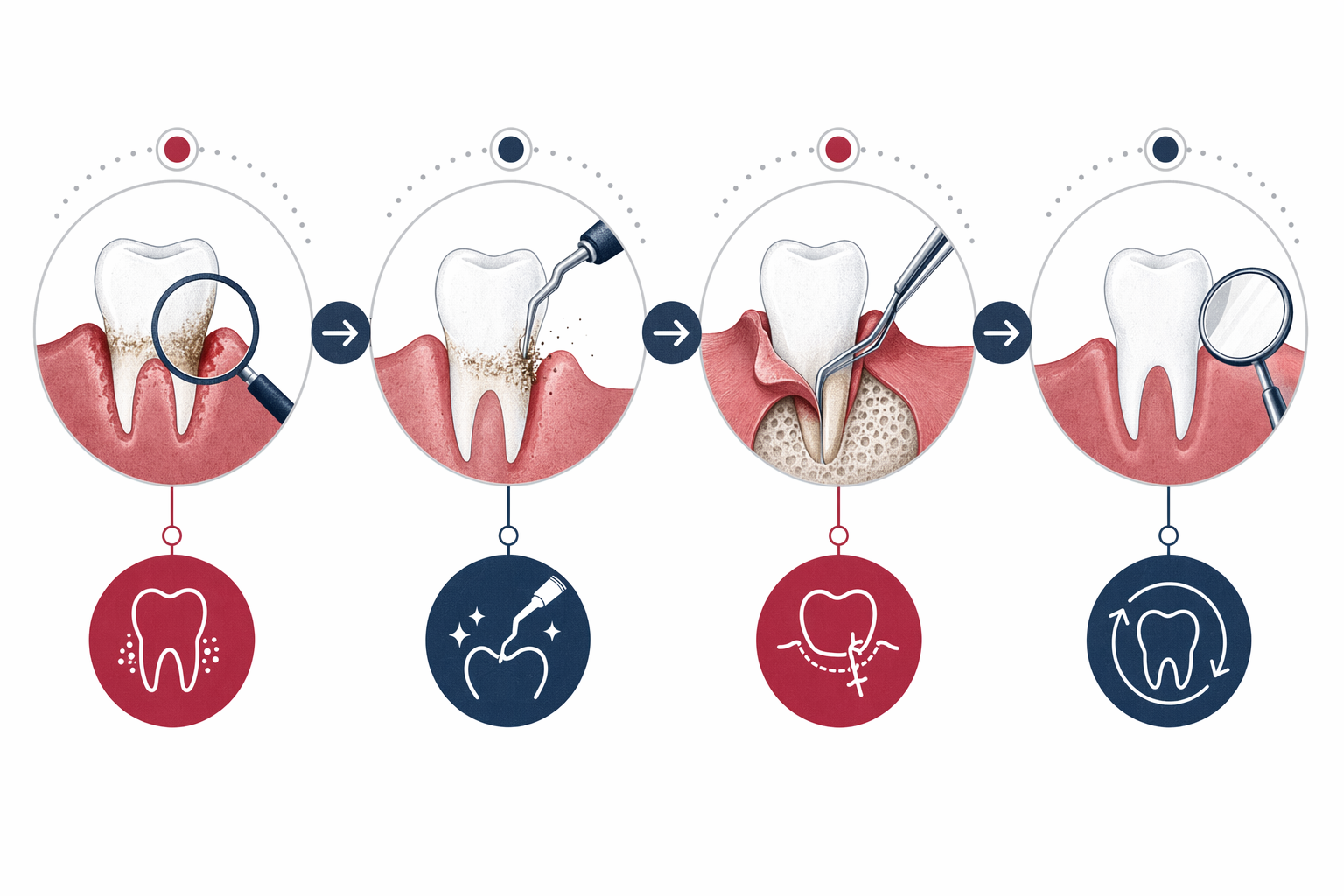
What gum disease treatment usually means
Periodontitis is a serious form of gum disease that can damage the gums, bone, and support around the teeth. Treatment is meant to control infection, reduce inflammation, and help protect the teeth and bone that remain. The right plan depends on an in-person exam, measurements around the teeth, and imaging taken by a licensed dentist or periodontist.
RootLine does not diagnose gum disease or provide care. We share general educational information and help people get matched with licensed periodontists. If you want a fuller background before you compare options, see stages of gum disease.
Many treatment plans include one or more of these:
- Deep cleaning (scaling and root planing): cleaning below the gumline to remove buildup and bacteria from root surfaces
- Periodontal maintenance: more frequent cleaning visits after active treatment, often every few months if your provider recommends it
- Gum grafting: adding tissue to cover exposed roots or protect areas where gums have receded
- Periodontal surgery: procedures to reduce deep pockets or improve access for cleaning around damaged areas
- Bone grafting or implant-related care: sometimes discussed when teeth are missing or support has been lost
Not everyone needs surgery. Many people start with conservative treatment, then the periodontist checks how the gums respond before recommending next steps.
How a licensed periodontist decides on a treatment plan
A periodontist is a dentist with advanced training in gums, bone support, and related procedures. If you are not sure what that means, this guide explains what a periodontist is.
A typical process often looks like this:
1. Exam and measurements
- The provider checks the gums, measures pocket depths, and looks for bleeding, recession, tooth mobility, and areas that are hard to keep clean.
2. X-rays or other imaging
- Imaging can help show bone loss, defects around teeth, or other concerns that are not visible from the outside.
3. Discussion of goals and options
- The provider may explain whether a deep cleaning may be enough to start, or whether grafting, surgery, or other care may also be considered.
4. Home-care instructions
- Good brushing and flossing or other cleaning tools are often part of the plan, because office treatment works best when daily cleaning improves too.
5. Follow-up and maintenance
- After treatment, the provider may recommend regular maintenance visits to help keep gum disease under control.
This is why online information can only stay general. Only a licensed periodontist can diagnose your condition and tell you which treatment, if any, fits your case.
Common treatments and what they involve
Different treatments solve different problems. Here is a simple overview.
Deep cleaning (scaling and root planing)
This is often the first step for periodontitis. The goal is to remove hardened buildup and bacteria from below the gums so the tissue has a better chance to calm down and reattach. It is usually done by area, often called a quadrant.
Gum grafts
Gum grafting may be discussed when roots are exposed, gums have receded, or an area needs more protective tissue. A graft can help cover vulnerable root surfaces in some cases and may improve comfort or make an area easier to maintain.
Periodontal flap or pocket-reduction surgery
If pockets are deep and difficult to clean, surgery may give the provider better access to remove buildup and shape the area for easier home care. Your provider can explain what is realistic in your specific case.
Bone grafting
Bone grafts may be considered in some areas of bone loss or after a tooth is removed, depending on the plan. They are also sometimes part of implant planning.
Dental implants after tooth loss
If gum disease has already led to tooth loss, an implant may be one option to replace a tooth after the area is evaluated and treated as needed. Learn more about dental implants.
Treatment plans are often combined. For example, someone may start with deep cleaning, then later need maintenance visits, and only some areas may need surgery or a graft.
Typical cost ranges to expect
Costs vary a lot. The real price depends on the diagnosis, number of teeth or areas treated, provider, insurance, and where you live. These are typical US estimates, not quotes:
- Deep cleaning (scaling and root planing): about $150-$400 per quadrant
- Gum graft: about $600-$1,200 per site
- Periodontal flap or pocket-reduction surgery: about $1,000-$3,000 per area
- Bone graft: about $300-$1,200
- Routine periodontal maintenance: about $115-$300 per visit
- Dental implant: often $3,000-$6,000 per tooth all-in over time
Insurance may help with some parts of care, but coverage rules differ by plan, waiting periods, annual maximums, and whether a procedure is considered necessary under that plan. You can read more at does insurance cover gum treatment or explore broader costs.
A careful provider should explain:
- what is being treated first
- whether pricing is per tooth, per area, per quadrant, or per site
- which parts may happen now versus later
- what insurance may or may not cover
- what follow-up maintenance may cost
It is okay to compare more than one office. You choose who to see, and you confirm the plan and price with the provider before any treatment.
Recovery and timeline: what many people can expect
Recovery depends on the treatment type, how many areas are treated, and your own healing response. There is no single timeline for everyone.
For deep cleaning, some people notice temporary soreness, sensitivity, or mild bleeding for a short time. A provider may suggest a follow-up visit to check how the gums respond.
For gum grafts or periodontal surgery, recovery is usually longer than for a deep cleaning. The provider may give instructions about eating, cleaning the area, and follow-up visits. Healing is often measured over days to weeks, while the full health of the gums may be reassessed over a longer period.
For implants or bone grafts, the timeline can be longer and may happen in stages over months, depending on the site and the overall treatment plan.
A few practical points:
- Ask when you can return to normal brushing in the treated area
- Ask what symptoms are common after the procedure and what is not
- Ask when you will know whether the treatment is working as expected
- Ask how often maintenance visits may be needed afterward
Safety note: if you have severe pain, facial swelling, fever, or trouble breathing or swallowing, seek urgent dental or medical care right away.
Pros, limits, and questions worth asking
Gum disease treatment can be very helpful, but it is not magic and it is not one-size-fits-all.
Possible benefits many people hope for
- less inflammation and bleeding
- shallower pockets in some areas
- better chance of keeping teeth longer
- easier daily cleaning at home
- less sensitivity from exposed roots in some graft cases
Important limits to understand
- treatment cannot promise to reverse every change from gum disease
- some areas respond better than others
- maintenance matters after active treatment
- more than one visit is often needed
- costs can add up if several areas are involved
Before you schedule, it helps to prepare a short list of questions. Our guide to questions to ask a periodontist can help, but these are a strong start:
- What stage or severity does this appear to be, and how do you know?
- Which treatment do you recommend first, and why?
- Are there alternatives, including more conservative options?
- How many teeth, sites, quadrants, or areas are involved?
- What are the typical costs, and what might change that estimate?
- What maintenance will I likely need after treatment?
- What home-care steps matter most for my case?
Clear answers can make it easier to compare providers fairly and avoid surprises.
How RootLine helps you find a periodontist
RootLine is a free, multilingual matching service for people across the US, including new immigrants and non-native English speakers. We help you connect with licensed periodontists so you can compare your options.
Here is how it works:
- You share contact and request details only
- We do not ask for a medical or dental history
- You can hear from matching providers in your area
- You compare, ask questions, and decide who to see
We do not provide exams, diagnoses, or treatment. The periodontist you choose is the one who can evaluate you in person and explain what care, if any, may be appropriate.
If you are ready to compare options, you can get matched. If you want a service-specific overview of one common first step, see deep cleaning and scaling.
Gum disease treatment may include deep cleaning, maintenance visits, grafts, or surgery, depending on what a licensed periodontist finds in an exam. RootLine does not diagnose or treat you. We help you compare licensed periodontists for free, and you confirm the plan, timing, and price directly with the provider.