Does dental insurance cover gum treatment?
Sometimes yes, sometimes no. Many dental plans help pay for some gum treatment, but coverage depends on your diagnosis, your plan rules, and which provider you choose.
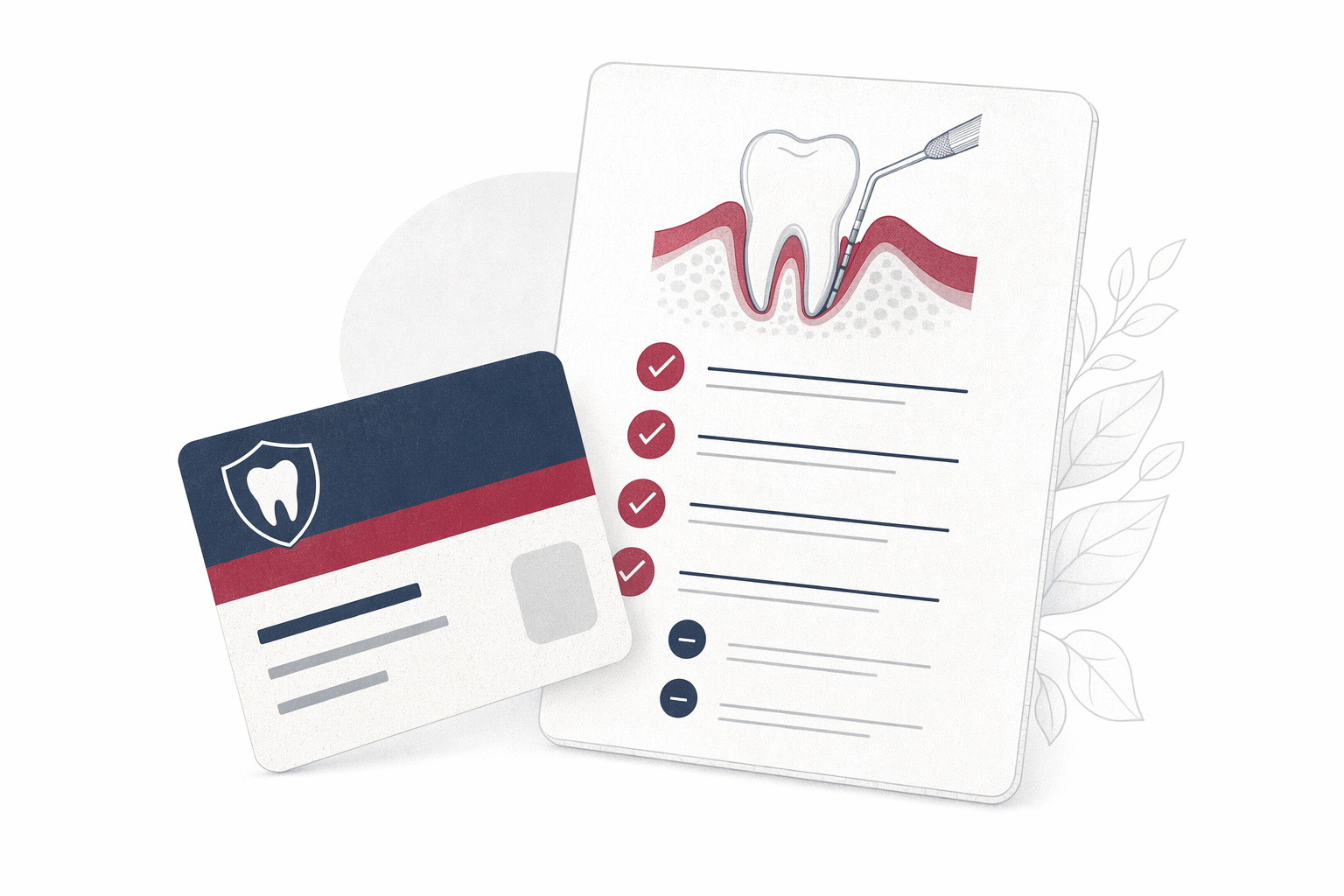
The short answer: coverage is common, but it varies
Dental insurance often helps with gum treatment, especially when a licensed dentist or periodontist says it is medically necessary after an in-person exam. But insurance does not cover every service the same way, and it usually does not pay the full cost.
Common periodontal services that may be covered include deep cleaning, periodontal maintenance, gum surgery, gum grafting, bone grafting, and sometimes implant-related care. Coverage can depend on:
- your specific plan
- whether the provider is in-network or out-of-network
- waiting periods
- annual maximums
- deductibles and copays
- frequency limits
- whether the treatment is considered basic, major, or not covered under your policy
For example, many plans help with scaling and root planing, also called a deep cleaning, when gum disease is present. Some plans also help with follow-up periodontal maintenance visits after treatment. Surgical care, gum grafts, and implants are more likely to have higher out-of-pocket costs, even when some coverage exists.
If you are still learning about the condition itself, this guide on gum disease treatment may help you understand the types of care a periodontist may discuss.
Important: only a licensed dentist or periodontist can diagnose gum disease and tell you what treatment you may need. RootLine is a free matching service. We do not diagnose, examine, treat, or give dental advice.
What services are often covered, and what they may cost
Insurance plans use different terms, but these are common periodontal services people ask about:
- Deep cleaning (scaling and root planing): often covered in part when gum disease is diagnosed. A typical range is about $150-$400 per quadrant before insurance. Real cost depends on the diagnosis, how many areas are treated, the provider, insurance, and where you live.
- Periodontal maintenance: often covered at set intervals after active treatment, though some plans limit how often. A typical range is about $115-$300 per visit before insurance.
- Gum graft: sometimes covered when a periodontist documents a clinical need, but patient cost can still be significant. A typical range is about $600-$1,200 per site before insurance.
- Periodontal flap or pocket-reduction surgery: some plans cover part of it as a major service. A typical range is about $1,000-$3,000 per area before insurance.
- Bone graft: coverage varies a lot, especially when tied to future tooth replacement. A typical range is about $300-$1,200 before insurance.
- Dental implant: many dental plans cover little or none of the implant itself, though some may help with parts of the process. A typical all-in range is about $3,000-$6,000 per tooth over time before insurance.
These are honest estimate ranges, not quotes. Your real price depends on the diagnosis, the number of teeth or areas treated, the provider, insurance, and the area.
If you want a closer look at common price ranges, see costs. If your plan mentions deep cleaning specifically, this page on deep cleaning and scaling may also help.
How to check your benefits before you book
A little prep can save money and reduce surprises. You do not need to know the final treatment plan before you start asking questions.
- Find your plan type. Check whether you have a dental HMO, PPO, discount plan, employer plan, marketplace add-on, Medicaid dental benefit in your state, or a standalone policy.
- Ask about network status. In-network care may cost less, but not always. Ask whether the periodontist is in-network and whether you have out-of-network benefits.
- Ask about waiting periods. Some plans make you wait before they help with major services.
- Check your annual maximum. Even when treatment is covered, many plans stop paying after you hit a yearly dollar limit.
- Ask about pre-treatment estimates. A provider may be able to send a pre-treatment estimate to your insurer after your exam so you can better understand expected coverage.
- Ask about frequency limits. Plans may limit how often they cover periodontal maintenance, x-rays, or certain procedures.
- Confirm what part is your responsibility. Ask about your deductible, coinsurance, and any non-covered services.
Useful questions to ask the insurance company or provider office:
- Is this provider in-network for my plan?
- Do I need a referral?
- Is there a waiting period for periodontal treatment or surgery?
- What is my annual maximum, and how much is left?
- Do you cover scaling and root planing? Periodontal maintenance? Gum grafts? Surgery? Implants?
- Will I need preauthorization or a pre-treatment estimate?
- What would I likely pay out of pocket?
If you want help preparing for these calls, questions to ask a periodontist can help you organize what to ask at the visit.
Common mistakes that lead to surprise bills
Insurance confusion is common. These mistakes happen a lot:
- Assuming 'covered' means free. Coverage often means the plan pays part, not all, of the cost.
- Not checking annual maximums. A plan may help with the first part of treatment, then stop once you hit the cap.
- Ignoring waiting periods. New plans may not help with major services right away.
- Confusing a cleaning with periodontal treatment. A routine cleaning and a deep cleaning are not the same thing in insurance terms.
- Skipping the network check. Out-of-network care may mean higher costs or more paperwork.
- Starting treatment without confirming the plan and price. After your exam, ask for a written treatment estimate and review it carefully.
- Assuming implants are covered because tooth removal was covered. Implant coverage is often separate and more limited.
It also helps to know that dental and medical insurance are not the same. In some cases, parts of oral treatment may involve medical benefits, but that depends on the situation and the policy. The provider's office can often explain what they usually submit, but your insurer gives the final answer on benefits.
You can learn more in Does insurance cover gum treatment? and compare that with your own plan documents.
What to do next if you think you may need gum treatment
If your gums bleed, feel sore, look swollen, or your teeth feel loose, the next step is not to guess your coverage alone. The most useful step is to book an in-person exam with a licensed dentist or periodontist so you can get a real diagnosis and a treatment recommendation.
Then:
- Get the diagnosis and treatment plan from the provider.
- Ask the office for a cost estimate based on your exam findings.
- Confirm benefits with your insurance company.
- Compare providers if you want. You choose who to see and whether to move forward.
- Review the final plan and price before any treatment begins.
RootLine can help you find licensed periodontists in the US at no cost to you. Our form asks for contact and request details only, not medical history. You can get matched and then compare your options yourself.
Safety note: if you have severe pain, facial swelling, fever, or trouble breathing or swallowing, seek urgent dental or medical care right away.
Insurance often helps with some gum treatment, but not always and usually not all of it. Get an in-person exam from a licensed periodontist, ask for a written estimate, check your benefits, and compare providers before you decide.