Signs and symptoms of gum disease
Gum disease can start quietly. Many people notice small changes first, like bleeding when brushing or gums that look red or puffy. This page gives general, educational information so you know what to watch for and when to see a licensed periodontist for a real diagnosis.
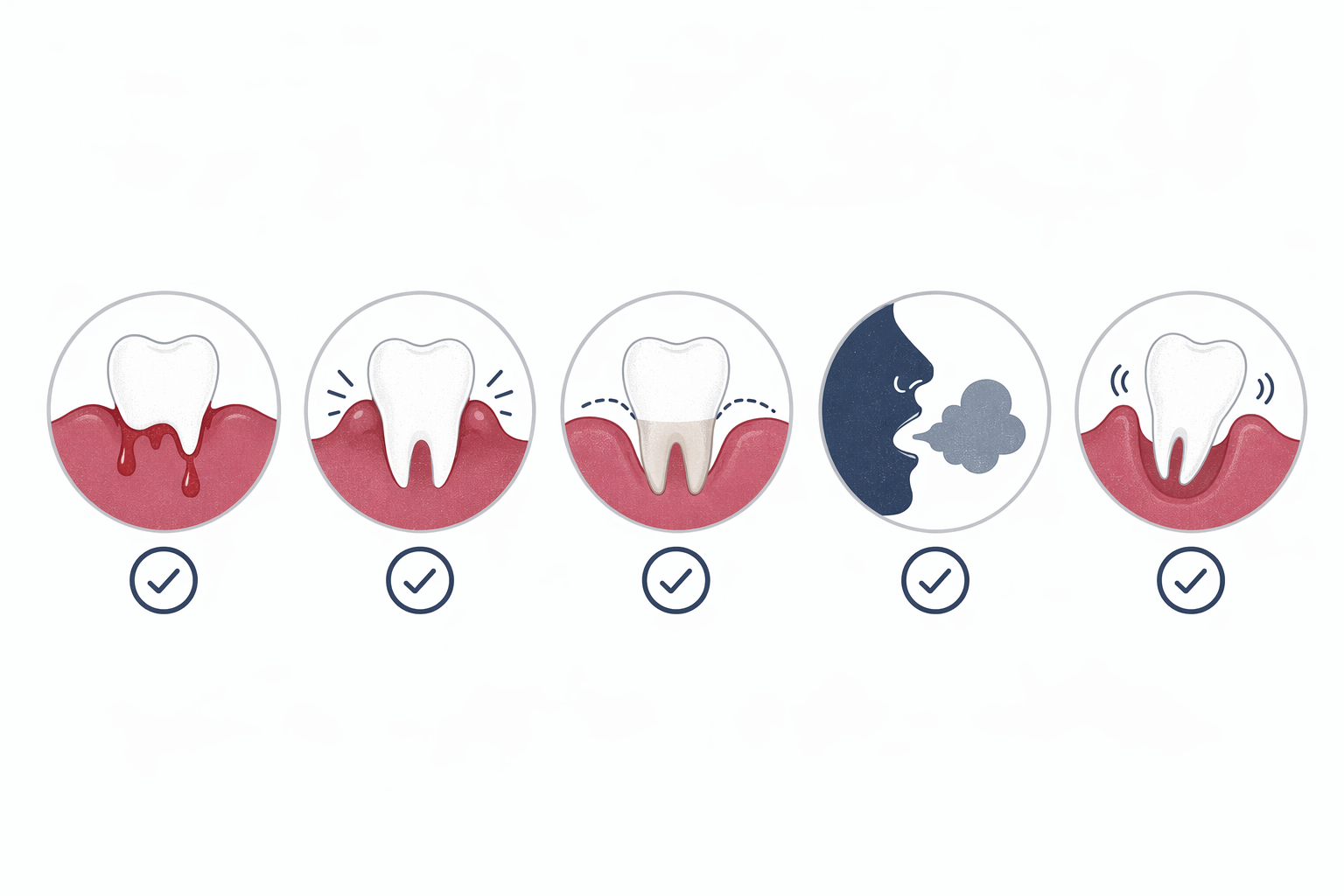
What gum disease can look and feel like
Gum disease does not always hurt at first. That is why it can be easy to miss. Early signs may seem minor, but they are worth paying attention to.
Common signs people notice include:
- Bleeding gums when brushing, flossing, or eating firm foods
- Red, swollen, shiny, or tender gums
- Bad breath that keeps coming back
- A bad taste in the mouth that does not go away
- Gums that seem to be pulling away from the teeth
- Teeth that look longer than before because more tooth is showing
- Spaces changing between teeth
- Loose teeth or teeth that feel different when biting
- Pus or drainage near the gums
- Pain when chewing in one area
These signs can happen for different reasons. They do not confirm a diagnosis by themselves. Only an in-person exam by a licensed dentist or periodontist can tell you what is going on and what treatment, if any, may be appropriate.
If you want a simple overview of how gum problems can progress, see stages of gum disease.
Signs that may be missed or misunderstood
Some gum disease symptoms are easy to ignore because they seem small or come and go.
Here are a few examples:
1. Bleeding only sometimes
Some people think occasional bleeding is normal if they flossed too hard. It can happen from irritation, but repeated bleeding is still a reason to get checked.
2. No pain
A lot of people expect a serious gum problem to hurt. Often, early or even moderate gum disease causes little pain.
3. Sensitive teeth near the gumline
This can happen when gums pull back. Sensitivity has several possible causes, so it needs a professional exam.
4. A bridge, denture, or crown area that feels hard to clean
Food trapping or bleeding around dental work can be a sign that the gum area needs attention.
5. Changes in the way your bite feels
If your teeth meet differently than before, it is worth asking about.
Many people also confuse temporary gum irritation with something harmless. The safest approach is simple: if a sign keeps happening, gets worse, or worries you, schedule an exam with a licensed periodontist or dentist. RootLine is a free matching service that can help you compare licensed specialists near you at get matched.
What to do if you notice these signs
You do not need to panic. But you also should not ignore ongoing gum changes.
A practical next step is:
1. Notice the pattern
Is the bleeding happening every day? Is one area swollen? Are your gums receding in more than one spot?
2. Keep your home care gentle and consistent
Brush carefully and clean between teeth as directed by your dental professional. This page is general education only, not medical advice.
3. Book an in-person exam
A licensed periodontist can examine the gums, measure pocketing, review x-rays if needed, and explain whether there is gum disease or another cause.
4. Ask clear questions
Bring a short list so you do not forget. Helpful examples are on questions to ask a periodontist.
5. Confirm the plan and price before treatment
You compare providers, choose who to see, and confirm the diagnosis, recommended care, timing, and cost directly with that office.
Possible treatment recommendations depend on the diagnosis. Some people are told they need more frequent cleanings. Others may hear about deep cleaning, gum grafting, or periodontal surgery. Typical estimates can vary a lot. For example:
- Deep cleaning: roughly $150-$400 per quadrant
- Routine periodontal maintenance: roughly $115-$300 per visit
- Gum graft: roughly $600-$1,200 per site
- Periodontal flap or pocket-reduction surgery: roughly $1,000-$3,000 per area
These are typical ranges, not quotes. The real price depends on the diagnosis, the number of teeth or areas treated, the provider, insurance, and where you live. You can read more at costs.
Common mistakes people make
A few common habits can delay care or create confusion.
- Waiting for pain before acting
Gum disease may not hurt much at first.
- Assuming bleeding gums are normal
Bleeding that keeps happening deserves attention.
- Thinking bad breath is only about food
Sometimes it is, but gum problems can also play a role.
- Stopping brushing or flossing because the gums bleed
Some people do this because they are worried. In many cases, inconsistent cleaning makes things harder to judge. A licensed dental professional can show you a safe technique for your mouth.
- Self-diagnosing from photos online
Pictures can be helpful for learning, but they cannot replace an exam.
- Choosing treatment based on price alone
A lower estimate is not always the better fit. Ask what is included, who performs the care, how many areas are involved, and what follow-up may be needed.
- Not checking insurance details
Coverage for periodontal care varies. Waiting periods, frequencies, and preauthorization rules may apply. General information is available at does insurance cover gum treatment.
When to get help sooner and what RootLine does next
Some gum symptoms can wait a short time for a regular appointment. Others should be checked sooner.
Try to arrange an exam soon if you have:
- Bleeding that keeps happening for days or weeks
- Gums pulling back more in one area
- Persistent bad breath with swollen gums
- A loose tooth or a bite that feels different
- Repeated swelling around the same tooth or implant area
Seek urgent dental or medical care right away if you have severe pain, facial swelling, fever, or trouble breathing or swallowing.
RootLine does not diagnose, examine, or treat gum disease. We are a free matching service. We help people across the US, including new immigrants and non-native English speakers, compare licensed periodontists. The form asks for contact and general request details only, not a medical or dental history.
If you are ready for the next step, you can get matched. You choose who to contact, and you confirm the plan and price with the provider before any treatment.
If your gums bleed, look swollen, smell bad, are pulling back, or your teeth feel loose, do not guess. See a licensed periodontist for an exam and diagnosis. RootLine can help you compare specialists for free, and you confirm the treatment plan and price directly with the office.