Where the cost of gum treatment goes
Gum treatment costs can feel confusing because the final price often depends on **what is being treated, how many areas are involved, and who provides the care**. This guide explains where the money usually goes so you can ask better questions and compare your options with confidence.
Why prices can look so different
Two people can both be told they need gum care and still get very different estimates. That does not automatically mean one office is overcharging or that one treatment is wrong. It often means the clinical situation is different.
In many cases, the total cost depends on things like:
- The diagnosis a licensed periodontist or dentist finds during an in-person exam
- How many teeth or areas need attention
- Whether the issue is handled with deep cleaning or a more involved procedure
- The provider's training, the local market, and the area of the US
- Imaging, anesthesia, follow-up visits, and maintenance care
- Whether insurance helps with part of the bill
For example, a person with mild gum inflammation may need a cleaning plan and monitoring, while someone with deeper pockets, gum recession, or missing teeth may be discussing surgery, grafting, or implants. Those are very different cost paths.
RootLine is a free matching service, not a dental provider. We do not diagnose or recommend a treatment plan. Our information is general and educational only. A licensed periodontist can examine you, explain the diagnosis, and tell you what treatment may be appropriate in your case.
Common parts of the bill
When people think about cost, they often focus on the procedure name. But the bill may include several pieces.
1. Evaluation and planning
A periodontist may charge for the exam, measurements around the gums, and imaging. This part helps the provider understand the condition before discussing treatment.
2. The treatment itself
Typical US ranges often look like this:
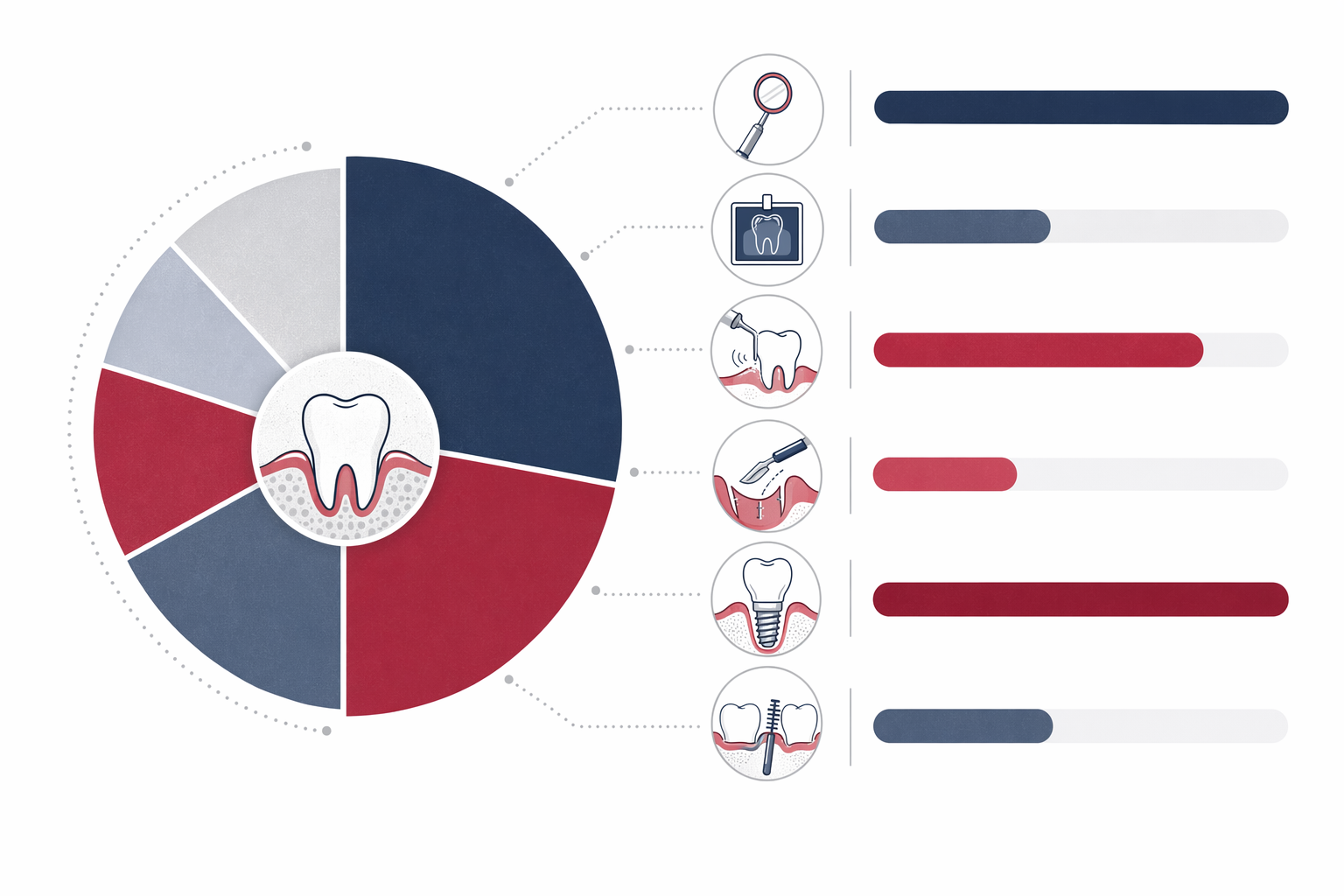
- Deep cleaning (scaling and root planing): roughly $150-$400 per quadrant
- Gum graft: roughly $600-$1,200 per site
- Periodontal flap or pocket-reduction surgery: roughly $1,000-$3,000 per area
- Bone graft: roughly $300-$1,200
- Dental implant: roughly $3,000-$6,000 per tooth all-in over time
- Routine periodontal maintenance: roughly $115-$300 per visit
These are typical ranges, not quotes. The real price depends on the diagnosis, the number of teeth or areas treated, the provider, insurance, and the area.
3. Materials and technique
Some treatments use membranes, grafting material, sutures, or other supplies. Those can change the price.
4. Comfort measures
Local anesthetic is common. In some offices, additional sedation options may affect cost.
5. Follow-up care
After treatment, some people need rechecks or maintenance visits. Those visits matter because gum care is often not a one-time event.
If you want a broader overview of typical ranges, see gum treatment costs.
What usually drives the total higher or lower
A higher price does not always mean better care, and a lower price does not always mean better value. It helps to understand the real cost drivers.
Scope of treatment
Treating one small area is very different from treating several quadrants of the mouth. This is one of the biggest reasons totals vary.
Type of service
Non-surgical care is often less expensive than surgical care. For example, gum disease treatment may begin with non-surgical steps, while advanced problems may lead to surgery or grafting discussions.
Complexity
Recession, deep pockets, bone loss, missing teeth, and previous dental work can all make planning more complex.
Insurance details
Even when a plan offers benefits, there may be deductibles, yearly maximums, waiting periods, frequency limits, or rules about what is considered covered. Two people with the same treatment plan may pay very different out-of-pocket amounts.
Geographic area
Costs in large metro areas are often different from costs in smaller cities or towns.
Provider fees
Offices set their own fees. That is why comparing more than one provider can be helpful.
If you are still learning the basics, what a periodontist is can help you understand why a general dentist may refer someone for specialized gum care.
What to do before you agree to treatment
You do not need to rush just because the numbers feel overwhelming. In many cases, a short checklist can help you make a clearer decision.
1. Ask for a written treatment plan.
Ask what is recommended now, what can wait, and what each line item means.
2. Confirm how many teeth, sites, quadrants, or areas are included.
This is one of the easiest ways to understand why one estimate is higher than another.
3. Ask what the estimate includes.
Good questions are:
- Does this include imaging?
- Does this include follow-up visits?
- Will I likely need maintenance visits afterward?
- Are there separate fees for graft materials or sedation?
4. Check insurance before treatment starts.
Ask the office for procedure codes if needed, then ask your insurer what is covered and what your out-of-pocket cost may be. You can also read does insurance cover gum treatment.
5. Compare more than one provider if you want to.
You choose who to see. You can compare communication style, experience, location, and how clearly the office explains price.
6. Confirm the plan and price directly with the provider before any treatment.
Estimates can change if the diagnosis or scope changes after the exam.
If you want help finding licensed periodontists to compare, you can get matched. The service is free to use, and the form asks for contact and request details only, not a medical history.
Mistakes people make when looking only at the price
It is normal to want the lowest number. But focusing only on the first estimate can lead to confusion later.
- Comparing unlike treatments. A deep cleaning estimate is not the same as a surgical estimate, even if both relate to gum disease.
- Ignoring maintenance. Some people budget for the first procedure but forget that ongoing periodontal maintenance may be part of long-term care.
- Assuming insurance will pay the same everywhere. Coverage can depend on your plan, the office, and timing.
- Not asking what happens next. The first step may not be the only step.
- Feeling pressured to decide on the spot. It is reasonable to take time, ask questions, and compare providers.
A better approach is to ask: What am I paying for, what is included, and what could change the cost later? That gives you a more useful comparison than price alone.
Because gum problems can range from early irritation to more advanced disease, it may also help to understand the stages of gum disease. This is general educational information only, not a diagnosis.
Your next step if you think you may need gum care
If your gums bleed, feel swollen, look like they are pulling away from the teeth, or you were told you may need periodontal treatment, the next step is an in-person exam with a licensed dentist or periodontist. That is the right way to get a diagnosis and discuss treatment options.
Bring a short list of questions, such as:
- What is the diagnosis?
- What treatment do you recommend first?
- Is this estimate for one area or several?
- What costs are separate?
- What follow-up care is usually needed?
- What should I ask my insurance plan?
You can compare providers, choose who you want to see, and confirm the plan and price before any treatment begins. If you have severe pain, facial swelling, fever, or trouble breathing or swallowing, seek urgent dental or medical care right away.
If you want help preparing, questions to ask a periodontist can give you a practical starting list.
Gum treatment costs vary because different people need different kinds and amounts of care. Ask for a written estimate, check what is included, compare providers if you want to, and get a diagnosis from a licensed periodontist before deciding.