Implant & periodontal maintenance
Implant and periodontal maintenance are follow-up cleaning visits for people who have gum disease, a history of gum treatment, or dental implants. This page gives general education only, not medical advice, and a licensed periodontist can tell you what care is appropriate for you.
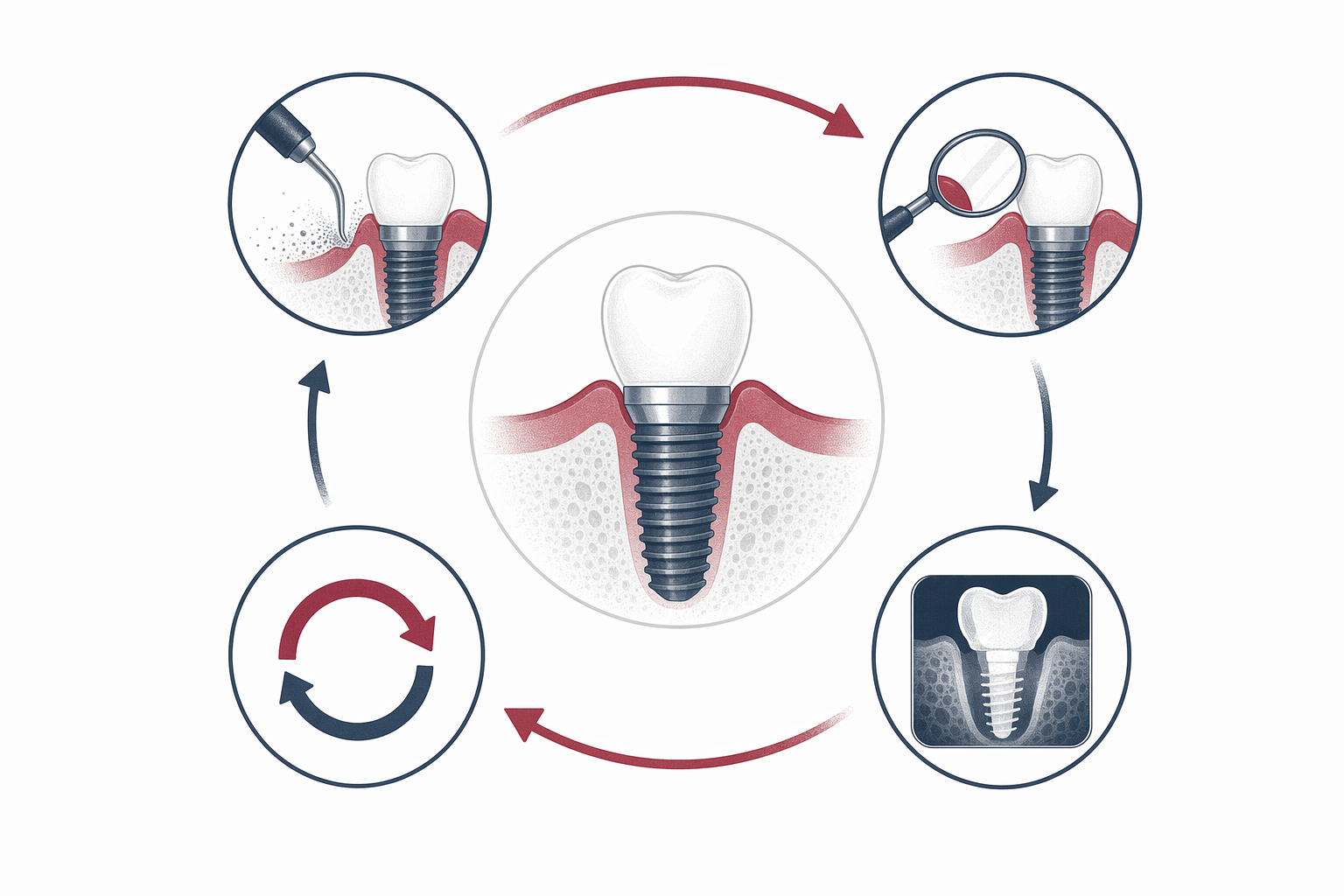
What implant and periodontal maintenance means
Periodontal maintenance is a cleaning visit for people who need more support than a routine dental cleaning. It is often used after treatment for gum disease, such as deep cleaning or gum surgery, to help control plaque and tartar below the gumline and watch for signs that the disease may be active again.
Implant maintenance is similar, but the focus is on keeping the tissues around a dental implant as healthy as possible. Many people with implants still need careful home care and regular follow-up visits because the gum and bone around an implant can also become irritated or infected.
A maintenance visit is not the same as a diagnosis. It is also not a promise that future treatment will not be needed. Your provider decides what is appropriate after an in-person exam, measurements, and X-rays if needed.
If you are new to gum care, it may help to read what a periodontist is and what they usually do.
What usually happens at a maintenance visit
What happens can vary by person and by provider, but many maintenance visits include:
- A review of your mouth today. The provider or hygienist may look at your gums, implants, bleeding, plaque buildup, and areas that are hard to keep clean.
- Periodontal charting or checks. They may measure gum pockets, note bleeding points, and compare changes over time.
- Cleaning above and below the gumline. This may include removing plaque, tartar, and biofilm from teeth, roots, and sometimes around implants using tools the office considers appropriate.
- Polishing or irrigation in some cases. Not every visit includes the same steps.
- Home-care guidance. You may be shown easier ways to clean around bridges, implants, or tight spaces.
- A recommendation for follow-up. Some people return every 3 months, others on a different schedule based on their exam and history.
If your gums look more inflamed than expected, or an implant area is concerning, the provider may recommend more than maintenance alone. That could mean additional evaluation, a deeper cleaning approach, or another type of periodontal treatment. You can learn more about deep cleaning and scaling if you are trying to understand the difference.
Important: severe pain, facial swelling, fever, or trouble breathing or swallowing means seek urgent dental or medical care right away.
Who may be told they need maintenance
A dentist or periodontist may recommend maintenance if you have a history like this:
- Past gum disease treatment
- Deep cleaning in the past
- Gum surgery or grafting in the past
- One or more dental implants
- Bleeding gums that have needed closer follow-up before
- Bone loss or deeper gum pockets that require monitoring
This does not mean every person needs the same schedule forever. Some people need closer follow-up for a period of time. Others may stay on maintenance long term. The reason is that gum disease can be chronic for many people, and implants also need ongoing checks.
A maintenance plan should be based on your exam, not on a one-size-fits-all rule. If you are unsure why it was recommended, ask the provider to explain what they are monitoring, how often they want to see you, and what signs would mean changing the plan.
Typical costs in the US
The price of maintenance visits can vary a lot. Routine periodontal maintenance often ranges from about $115 to $300 per visit in the US.
That is a typical estimate, not a quote. The real price depends on:
- Your diagnosis and current condition
- Whether you have natural teeth, implants, or both
- How many areas need special attention
- The provider and the office fees
- X-rays or other services done the same day
- Your insurance coverage and your area
If more treatment is needed, the cost is usually higher than a maintenance visit alone. Typical ranges people often see include:
- Deep cleaning (scaling and root planing): about $150-$400 per quadrant
- Gum graft: about $600-$1,200 per site
- Periodontal flap or pocket-reduction surgery: about $1,000-$3,000 per area
- Bone graft: about $300-$1,200
- Dental implant: about $3,000-$6,000 per tooth all-in over time
These are general US ranges only. They are not promises or bids. Before any treatment, you should confirm the diagnosis, treatment plan, timing, and price directly with the provider. If cost is a big concern, our costs guide and insurance guide can help you prepare questions.
Recovery, timeline, and what to expect after
A maintenance visit is often easier to recover from than a first deep cleaning or gum surgery, but each person is different.
Many people feel normal quickly after a standard maintenance cleaning. Some notice temporary tenderness, slight gum soreness, or minor sensitivity, especially if the gums were inflamed to begin with. Your provider can tell you what is typical for your situation.
A common timeline looks like this:
- Same day: your mouth may feel cleaner, and some areas may feel a little tender
- 1-3 days: minor irritation often settles down
- Next visit: the provider compares your gum measurements, bleeding, and plaque control over time
For implant maintenance, the point is not just to clean. It is also to watch the gum and bone support around the implant over time. If an area keeps bleeding, deepens, or becomes hard to clean, the provider may want a closer look.
If you have ongoing bleeding, bad taste, new looseness, or discomfort that does not improve, contact a licensed dentist or periodontist. RootLine does not provide care or advice, but we can help you get matched with a licensed periodontist so you can compare options.
Pros, limits, and when maintenance may not be enough
Maintenance can be very helpful, but it has limits.
Potential benefits
- Ongoing professional cleaning in areas that are hard to reach at home
- Regular checks for changes in gum pockets, bleeding, and implant health
- A chance to catch problems earlier than if you wait a long time between visits
- Personalized home-care tips based on what the provider sees
Limits to know about
- It does not replace a full exam when a new problem appears
- It may not be enough if gum disease is active or worsening
- It does not guarantee that teeth or implants will stay stable
- Some people will still need additional treatment later
Signs a provider may want more than maintenance
- Deeper pockets or more bleeding than before
- Continued bone loss on imaging
- Pus, ongoing bad taste, or gum infection concerns
- Problems around an implant that need closer evaluation
If you want background before your visit, gum disease stages can make the terms easier to understand. Only an in-person provider can diagnose what stage, if any, applies to you.
Questions to ask before you choose a provider
You do not need to guess. Ask direct questions and compare answers.
- Why are you recommending maintenance instead of a routine cleaning?
- How often do you want me to come in, and what findings are you basing that on?
- What will be checked around my implants or gum pockets at each visit?
- What would make you recommend additional treatment later?
- What is the estimated cost of today’s visit, and what might cost extra?
- Do you accept my insurance, and how do you handle pre-treatment estimates?
- What should I do at home between visits?
RootLine is a free matching service. We are not a dental office or a provider. We do not diagnose, treat, or give medical advice. If you use our form, it asks for contact and general request details only, not your medical or dental history. Then you can compare licensed periodontists, choose who to contact, and confirm the plan and price yourself before any treatment.
If you want help getting started, use get matched or review questions to ask a periodontist before your appointment.
Maintenance visits help watch and clean gums and implants after gum problems or treatment. Costs often run about $115-$300 per visit, but the real price depends on your needs, your provider, insurance, and where you live. RootLine can help you compare licensed periodontists for free, and you choose who to see and confirm the plan and price yourself.