How to Slow or Stop Gum Recession
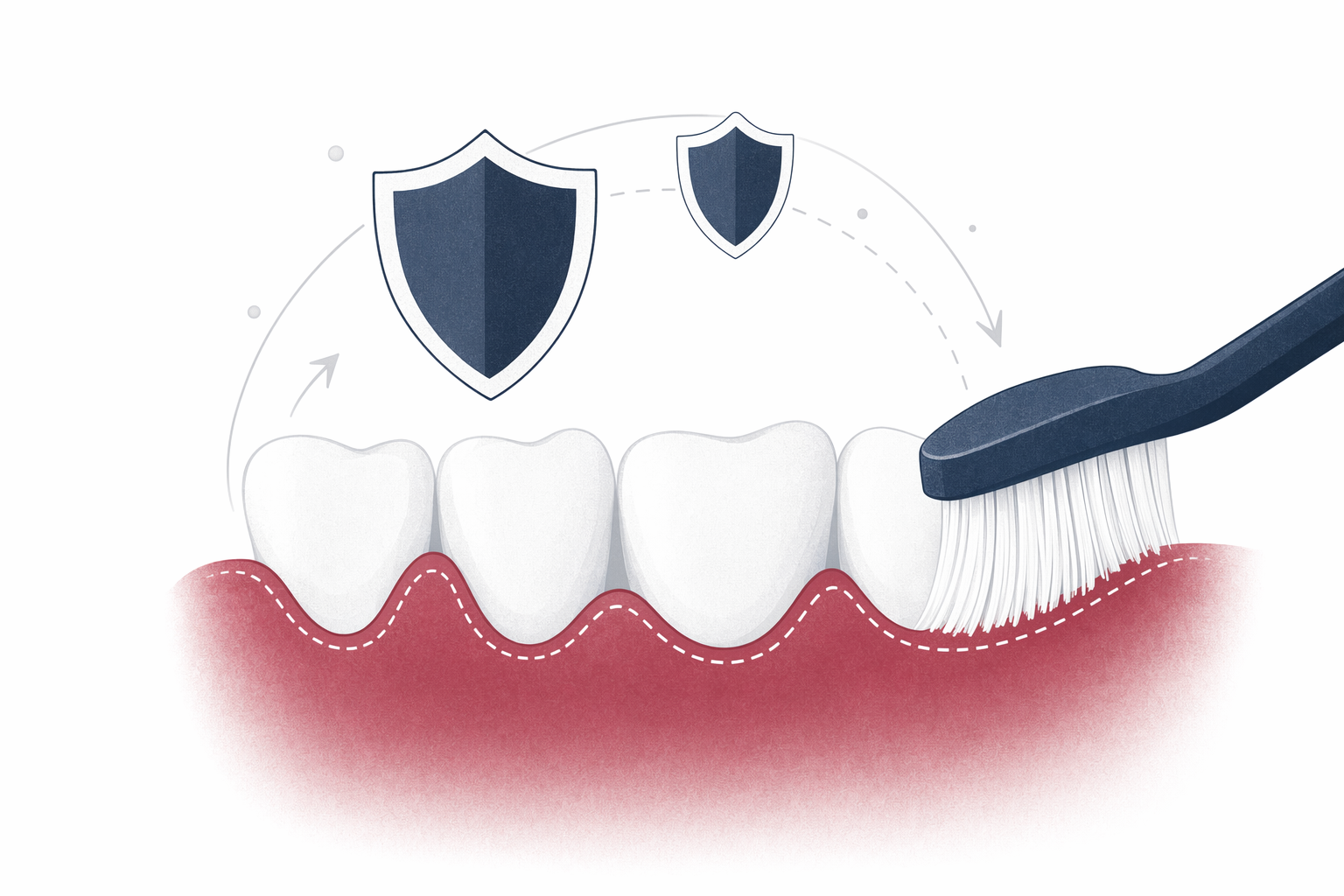
Gum recession means the gum line moves away from the tooth, which can make teeth look longer or feel more sensitive. **Some causes can be managed and more damage may be slowed**, but recession that has already happened often does not fully grow back on its own.
The short answer
If your gums seem to be pulling back, the main goal is usually to find the cause and stop more loss. A licensed periodontist can examine the area, measure the gums and bone, and tell you what kind of treatment, if any, may help.
In general:
- Good daily cleaning habits may help reduce irritation from plaque.
- Treating gum disease early may help slow further recession if infection is part of the problem.
- Changing brushing habits may help if the tissue is being rubbed by hard or aggressive brushing.
- A night guard may be discussed by a dentist if clenching or grinding is affecting the teeth and gums.
- Gum grafting may be one option in some cases to cover exposed root areas or protect thin tissue, but it is not right for everyone.
What is important to know: RootLine does not diagnose or treat gum problems. We share general educational information and help you compare licensed periodontists. For a diagnosis and treatment plan, see a licensed periodontist in person. If you want to learn more about gum disease and treatment basics, see gum disease treatment and what a periodontist is.
Why gums recede
Gum recession is not one single problem. It can happen for different reasons, and sometimes more than one reason is involved at the same time.
Common reasons a periodontist may look for include:
- Gum disease that damages the tissue and supporting bone around the teeth
- Plaque and tartar buildup that irritates the gums
- Brushing too hard or using a brush that is too firm for your mouth
- Thin gum tissue that may be more likely to pull back over time
- Teeth grinding or clenching that may add stress to teeth and surrounding structures
- Crooked teeth or bite issues that may place extra force on certain teeth
- Tobacco use which can make gum problems harder to control
- Piercings or repeated rubbing against the gums in some people
A few signs people notice are:
1. Teeth that look longer than before
2. Sensitivity to cold, sweets, or brushing
3. Notches near the gum line
4. Spaces appearing between teeth
5. Redness, bleeding, bad breath, or loose teeth if gum disease is also present
Not every sensitive tooth means recession, and not every receding gum line means severe disease. That is why an in-person exam matters. A periodontist can tell whether the issue is mild, active, stable, or related to deeper bone loss. For background, this guide on stages of gum disease may help you understand what providers look for.
What may help slow more recession
The best next step depends on the cause, but these are common ways people try to protect their gums while they arrange an exam:
1. Brush gently twice a day
Use a soft-bristle toothbrush and small circles or gentle strokes. Pressing harder does not clean better. Many people do better when they hold the brush with a lighter grip.
2. Clean between teeth daily
Floss or another cleaner can help remove plaque where a brush cannot reach. If your gums bleed, do not assume that means you should stop. Bleeding can be a sign of inflammation, but a provider should assess the reason.
3. Do not ignore signs of gum disease
Bleeding gums, bad breath, tenderness, or looseness can mean you need professional care. Some people need a deep cleaning, also called scaling and root planing. Typical US cost is about $150-$400 per quadrant, but the real price depends on the diagnosis, how many areas are treated, the provider, insurance, and your location. Learn more about deep cleaning and scaling.
4. Avoid tobacco if you can
Smoking and other tobacco use can make gum problems harder to manage and healing harder to predict.
5. Ask about grinding or clenching if you suspect it
Jaw soreness, chipped teeth, or morning tightness can be clues. A dentist or periodontist can tell you whether this seems relevant.
6. Get a specialist opinion if roots are exposed or the area keeps worsening
In some cases, a periodontist may discuss grafting or another procedure to protect the tooth or improve comfort and coverage. This depends on the tooth, gum thickness, bone support, and your overall exam findings.
These steps are general education, not medical advice. They may help some people, but only an exam can show what is really going on.
What usually does not happen on its own
A common question is whether receded gums grow back naturally. In many cases, the lost gum position does not fully return on its own. The good news is that further damage can sometimes be slowed when the cause is addressed early.
If a periodontist thinks treatment is needed, they may discuss options such as:
- Professional cleaning or maintenance if inflammation and buildup are part of the problem
- Scaling and root planing for gum disease below the gum line
- Gum graft surgery to add or move tissue over an exposed root in selected cases
- Other periodontal procedures if there is deeper disease affecting bone and pockets around teeth
Typical US cost ranges people often see are:
- Routine periodontal maintenance: about $115-$300 per visit
- Gum graft: about $600-$1,200 per site
- Periodontal flap or pocket-reduction surgery: about $1,000-$3,000 per area
- Bone graft: about $300-$1,200
These are estimates, not quotes. The real price depends on the diagnosis, the number of teeth or areas treated, the provider, insurance, and the area. If you are comparing options, gum grafts and periodontal surgery can help you understand the terms before you speak with a specialist.
What to do next
If you think your gums are receding, try to keep the next steps simple:
- Take note of what you are seeing. Is one tooth sensitive? Are several teeth looking longer? Do your gums bleed when brushing?
- Schedule an exam with a licensed periodontist. The goal is to find the cause, not guess.
- Compare your options. You choose who to see, and you confirm the plan and price with the provider before any treatment.
- Use RootLine if you want help finding specialists. Our matching service is free to you. The form asks for contact and request details only, not a medical or dental history.
Before your visit, it may help to write down questions like:
1. What is likely causing the recession?
2. Is it stable, or does it appear to be getting worse?
3. Do I need a cleaning, maintenance, a graft, or just monitoring right now?
4. What are the typical costs in my case, and what might insurance cover?
You can start here: Get matched. If cost is a concern, does insurance cover gum treatment? may also help.
Safety note: If you have severe pain, facial swelling, fever, or trouble breathing or swallowing, seek urgent dental or medical care right away.
If your gums are pulling back, do not panic, but do get them checked. Gentle brushing and good daily cleaning may help protect your gums, but a licensed periodontist needs to find the cause and tell you whether you need monitoring, cleaning, or another treatment.